13.5, 18 or 24 inches — the number that decides everything else
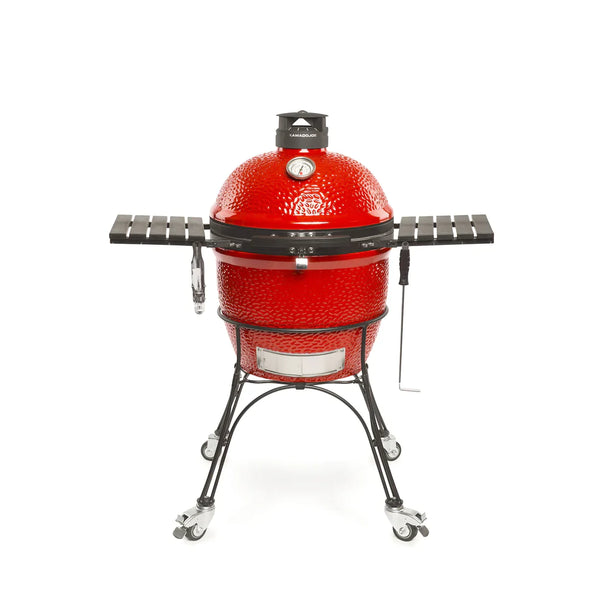
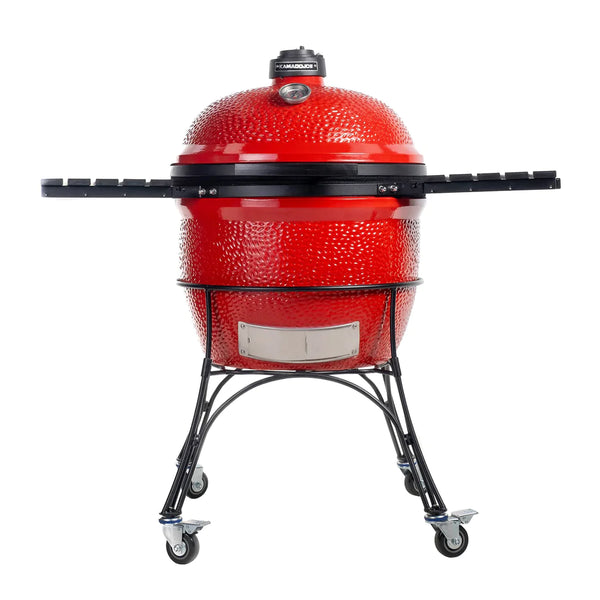
Kamado Joe sells three grills, and the difference that actually matters isn't the generation or the colour — it's the cooking surface. Joe Jr is 13.5 inches across (150 sq in). Classic Joe is 18 inches (250 sq in). Big Joe is 24 inches (450 sq in). Everything else — price, weight, how many ribs you can fit flat, whether it fits in a ute — follows from that one number.
13.5 in
Joe Jr
One rack of ribs, cut in half
18 in
Classic Joe
A full brisket, or two racks of ribs
24 in
Big Joe
Two full briskets, or three racks of ribs
Most people get this decision wrong in a specific direction: they buy for the party they hosted once, not the Tuesday-night dinner they'll actually cook a hundred times.
Joe Jr: 13.5 inches, and it's not a toy
The Joe Jr is a real kamado at a smaller scale — same ceramic shell, same airflow control, and the same 225–750°F (107–399°C) working range on the spec sheet as the bigger two. What changes is capacity, not capability. It ships on a stand rather than a wheeled cart, and at 35 kg for the grill itself, it's genuinely liftable into a car boot or ute tray.

150 square inches is enough for two spatchcocked chicken halves or a rack of ribs cut in two. It is not enough for a family of four's Sunday roast without careful positioning, and it will never hold a full brisket flat. Buy it as a portable second grill, a camping companion, or a first kamado for one or two people — not as the only grill for a house that regularly feeds a crowd.
Classic Joe: 18 inches, the one most people should actually buy
250 square inches handles a full brisket without folding it, two racks of ribs laid flat, or a whole chicken with room for vegetables alongside.

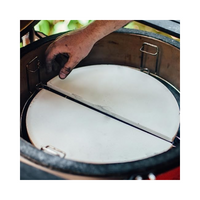
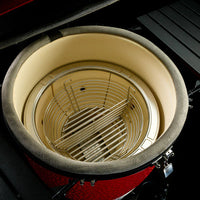
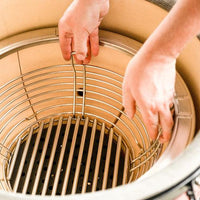
We stock two active versions. Series I is the original vent and hinge configuration. Series II adds the improved hinge and the divide-and-conquer cooking system — split, stacked cooking surfaces that let you run two zones (say, a low-and-slow shoulder on one level, direct heat for vegetables on the other) without one heat source compromising the other. If the price gap between them isn't large in the moment you're buying, Series II's hinge and zone flexibility are worth the difference for most cooks.
Where the Classic runs out of room: back-to-back packer briskets, competition-style multi-protein cooks, or feeding eight-plus people without cutting things in half to make them fit.
Big Joe: 24 inches, for the cook who keeps running out of grate
450 square inches is close to double the Classic's surface. Two full packer briskets side by side. Three racks of ribs laid flat, where the Classic takes two. Two temperature zones with enough room in each that they don't fight each other. This is the size that stops you from turning down a cooking project because there isn't physically room for it.

The trade-offs are real and worth saying plainly: it's heavier, it eats more charcoal per cook, and moving it once it's positioned is a two-person job. We stock Series I (BJ24RH) and Series II (BJ24RHC). The upgrade is the same as on the Classic, but here the two are $482 apart, so our Big Joe pick is Series I: the same 24-inch grate, the same ceramic and the same Divide & Conquer racks. Pay the extra for Series II only if the Air Lift hinge on a 24-inch dome is worth it to you.
The three sizes, side by side
| Model | 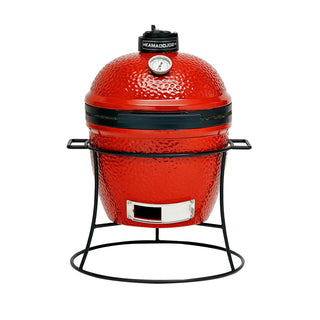 Joe Jr13.5 in | Most people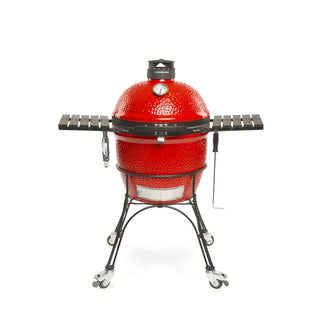 Classic Joe18 in | 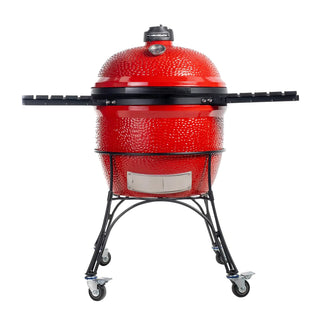 Big Joe24 in |
|---|---|---|---|
| Grate | |||
| Grate | 13.5 in | 18 in | 24 in |
| Cooking area | |||
| Cooking area | 150 sq in | 250 sq in | 450 sq in |
| Feeds | |||
| Feeds | 1–2 people | 4–6 people | 8+ people |
| Fits flat | |||
| Fits flat | One rack of ribs, cut in half | A full brisket, or two racks of ribs | Two full briskets, or three racks of ribs |
| Moving it | |||
| Moving it | One-person lift | Stays on its cart | Two-person move |
| Full charcoal load | |||
| Full charcoal load | 1.4 kg | 2.7 kg | 4.5 kg |
| Grill weight | |||
| Grill weight | 35 kg | 105 kg | 169 kg |
| Boxed, as shipped | |||
| Boxed, as shipped | 45 kg | 127 kg | 188 kg |
| Warranty | |||
| Warranty | Same for all 3. Lifetime warranty on the ceramic firebox, dome and body; 5 years on bands, hinges, cart and stand. What's covered | ||
| Recommended version | |||
| Recommended version | Joe Jr $699 | Series II $1,799 Also stocked Series I $1,799 | Series I $2,017 Also stocked Series II $2,499 |
| Prices live, inc. GST | Joe Jr, $699 | Classic Joe, $1,799 | Big Joe, $2,017 |
Where the numbers come from. Kamado Joe's spec sheets, for the recommended version of each; the Big Joe's dimensions, weight and charcoal load come from the Big Joe Series II sheet, the only one that lists them. Boxed weight is grill, stand, shelves and packaging, from our shipping records. Prices are live from our catalogue.
The mistake worth avoiding
Buying too big is the more common error, and it's the one you pay for every week: more charcoal per cook, more ceramic to heat up for a single steak, and a grill that takes over a small patio when you're cooking for two most nights. Buying too small costs you less often, but it does cost: a Joe Jr feels like plenty right up until the week you're smoking for a family gathering and the ribs don't fit flat. That's the gap the Classic's 18 inches covers.
Size it for an ordinary Saturday, not for Christmas Day.
The rule we'd give a mate
If you're genuinely unsure, the Classic Joe is the safer default. It's the size Kamado Joe designs everything else around, the one with the deepest accessory range, and the one that most Australian backyards and most weekly cooking habits actually need.
Frequently asked questions
Is the Joe Jr big enough for a family of four?
Not as the only grill. Its 13.5-inch grate (150 sq in) takes one rack of ribs cut in half, or two spatchcocked chicken halves, so feeding four means cooking in rounds. It's a good second grill, or a first kamado for one or two people. More on the Joe Jr.
What's the real difference between Series I and Series II?
Series II adds an improved hinge and the divide-and-conquer system — stacked, split cooking surfaces that let you run two temperature zones on one grill without them interfering with each other. Series I has the same ceramic core and heat retention; you're paying for hinge feel and zone flexibility, not fundamental cooking ability.
Should I buy the Classic or save up for the Big Joe?
If you cook for four to six people most weeks, the Classic's 250 square inches covers you without strain. Step up to the Big Joe only if you're routinely hitting the Classic's limits — splitting racks to fit them, or turning down cooking projects because there's no room.
Can the Joe Jr do everything the bigger models can?
Cooking-wise, yes — same ceramic, and the spec sheets give all three the same 225–750°F (107–399°C) working range. The only thing that changes with size is how much food fits on the grate at once.
Is a bigger kamado harder to use?
Not really — airflow control works the same way at every size. What changes is fuel use (more charcoal to heat more ceramic) and portability (the Big Joe is a two-person lift once it's off the truck).
Do all three sizes take the same accessories?
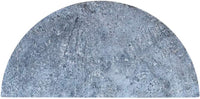
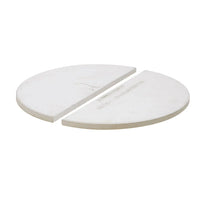
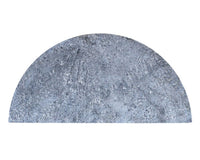
No — heat deflectors, grates, and soapstones are sized per model, so a Classic Joe accessory won't fit a Big Joe or Joe Jr. Check the model number before buying add-ons.