In a fan-forced oven at 180°C (190°C if your oven has no fan), a whole roast chicken takes about 40 to 50 minutes per kilo. A size 16 bird (1.6 kg) needs roughly 1 hour 5 minutes to 1 hour 20 minutes, and a size 20 (2 kg) about 1 hour 20 minutes to 1 hour 40 minutes. On a barbecue with the lid down at 180 to 200°C and the heat to one side, it is a little quicker, at about 35 to 45 minutes per kilo. Either way the clock only tells you when to start checking. The chicken is done when a thermometer reads 75°C in the thickest part of the thigh, clear of the bone, which is the Food Safety Information Council's figure for all poultry. Rest it 10 to 15 minutes, then carve.
| The short answer | Oven | BBQ with a lid |
|---|---|---|
| Temperature | 180°C (350°F) fan-forced, 190°C (375°F) conventional | 180 to 200°C (350 to 400°F), lid down, indirect heat |
| Time per kilo | 40 to 50 minutes | 35 to 45 minutes |
| First thermometer check | About 35 minutes per kilo | About 30 minutes per kilo |
| Cooked when | 75°C (167°F) in the thickest part of the thigh and the breast | |
| Rest before carving | 10 to 15 minutes, uncovered or under a loose sheet of foil | |
Roast chicken cooking time by weight
Australian chickens are sold by size, and the size is the weight in hundreds of grams: a size 18 weighs about 1.8 kg. Find the size on the label, then read across. The times are for a whole, unstuffed bird that goes in straight from the fridge.
| Chicken size | Weight | Oven, 180°C (350°F) fan-forced | BBQ, lid down, 180 to 200°C (350 to 400°F) | First check: oven / BBQ |
|---|---|---|---|---|
| Size 12 | 1.2 kg (2.6 lb) | 50 minutes to 1 hour | 45 to 55 minutes | 40 / 40 minutes |
| Size 14 | 1.4 kg (3.1 lb) | 55 minutes to 1 hour 10 minutes | 50 minutes to 1 hour 5 minutes | 50 / 45 minutes |
| Size 16 | 1.6 kg (3.5 lb) | 1 hour 5 minutes to 1 hour 20 minutes | 55 minutes to 1¼ hours | 55 / 50 minutes |
| Size 18 | 1.8 kg (4 lb) | 1 hour 10 minutes to 1½ hours | 1 hour 5 minutes to 1 hour 20 minutes | 1 hour 5 / 1 hour |
| Size 20 | 2 kg (4.4 lb) | 1 hour 20 minutes to 1 hour 40 minutes | 1 hour 10 minutes to 1½ hours | 1 hour 10 / 1 hour 5 |
| Size 22 | 2.2 kg (4.9 lb) | 1½ hours to 1 hour 50 minutes | 1 hour 20 minutes to 1 hour 40 minutes | 1¼ hours / 1¼ hours |
Where the numbers come from. Ingham's own whole chicken cooking guide asks for a 180°C fan-forced oven (190°C conventional) and 20 to 25 minutes for every 500 g, which is the 40 to 50 minutes a kilo in the oven column; Woolworths' roasting guide lands on the same rate. The barbecue column is our own planning rule, inside Weber Australia's poultry barbecuing guide (1¼ to 1½ hours for a 2 to 2.5 kg bird, indirect at 190 to 230°C) and Kamado Joe's figure of about an hour for a size 16 to 18 at 180°C. The hood throws heat back down onto the bird, which is why the barbecue usually wins.
Slow end of the row: a door or lid that keeps opening, a crowded oven, a cold or windy day outside. Quick end: a bird that stood 20 to 30 minutes on the bench, an oven that runs hot, or a kamado or pellet grill holding its number steadily. In Fahrenheit, 160°C is 325°F, 180°C is 350°F, 200°C is 400°F and 220°C is 425°F. Our 75°C finish is 167°F; the 165°F on US charts is 74°C, the NSW Food Authority's figure.
Roasting chicken in the oven: settings that matter
- Fan or conventional. A fan cooks faster, so set it 10 to 20 degrees lower: 180°C fan matches 190 to 200°C conventional. Use fan bake, not fan grill, which browns the top hard and leaves the thighs behind.
- Steady or hot start. A steady 180°C fan is forgiving and is what the table assumes. For deeper colour, give it 15 minutes at 220°C, then 180°C for the rest; that usually takes about 10 minutes off. Do not run the whole cook at 220°C, or the breast overshoots before the thighs are done.
- Tray and shelf. Use a tray only a little bigger than the bird, sit the chicken on a rack or thick onion rounds, and roast on the middle shelf with any vegies above it.
- Cold from the fridge. Twenty to 30 minutes on the bench, covered, trims about 10 minutes. Leave it no longer than that.
When is roast chicken cooked? 75°C, read in two places
Chicken has no rare or medium. It is either at 75°C in its thickest part or it is not finished yet. The Food Safety Information Council's chicken page sets 75°C for all poultry, measured with a meat thermometer in the thickest part. The NSW Food Authority lists 74°C for whole chicken and turkey and every piece, so a bird at 75°C clears both. Where your pack asks for more (Ingham's prints 82°C on its own birds), cook to the pack. Unlike a beef roast, a chicken gets no early take-off: it must read 75°C while it is still in the heat.
- The thigh. Push the tip into the inner thigh where it meets the breast and stop before you touch bone, which reads high. If you feel it, back out a centimetre.
- The breast. Go in from the neck end, level with the board, into the deepest part. In some ovens and barbecues it lags behind the thigh.
If either is short, close up and check again in 10 minutes. With no thermometer, the Council's fallback is juices from the thigh that run clear with no pink, though the NSW Food Authority warns that colour is not always reliable. Our folding digital food thermometer has a stainless probe and a magnet to park it on the fridge or the barbecue, and costs around $20 to $30. To keep the lid shut, leave a probe in: the FireBoard Pulse has no cable, reads the meat (-10 to 100°C, ±0.2°C) and the air around the bird (up to 350°C), and sends both to your phone over Bluetooth 5.3. More in our BBQ thermometers range.

How to set up a barbecue to roast a chicken
Roasting on a barbecue means indirect heat: the fire sits to the side or under a barrier, the chicken sits away from it, and the lid traps hot air around the whole bird the way an oven does. Straight over a flame, the skin burns long before the thigh reaches 75°C.
- Gas with a hood. Light the outside burners, leave the middle off, sit the bird in a tray over the unlit middle and hold 180 to 200°C on the hood gauge. Treat that gauge as a guide; the probe in the meat has the final word. The EuroGrille 5-burner has four 13 MJ/h main burners under a stainless hood, the layout this wants. See our gas BBQs.
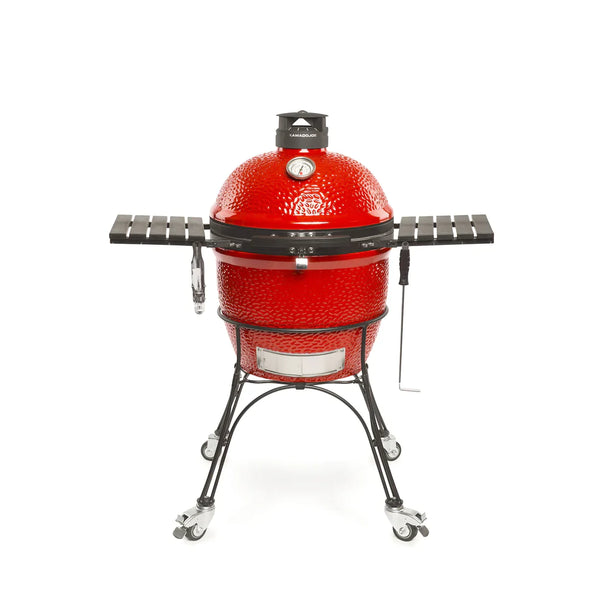
- Kamado. Put the deflectors in, set the grate above and bring the dome up to 180 to 200°C slowly from below, because a kamado is easy to push up and slow to bring down. On a Kamado Joe Classic Joe II, the half-moon deflector plates fit the Classic I, II and III and deflect half the grill or all of it. More kamado BBQs.
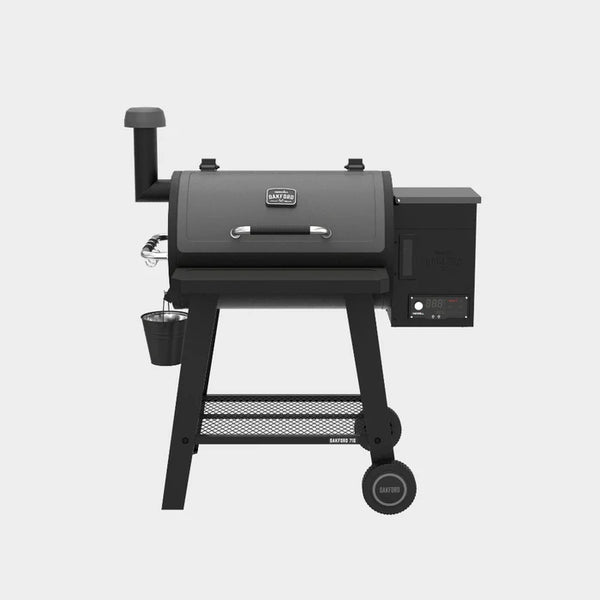
- Pellet grill. Indirect by design, with a controller that holds the number like an oven thermostat. Set 190 to 200°C and close the lid. The Oakford 715 has a Wi-Fi and Bluetooth controller and comes with a meat probe. Browse pellet grills.
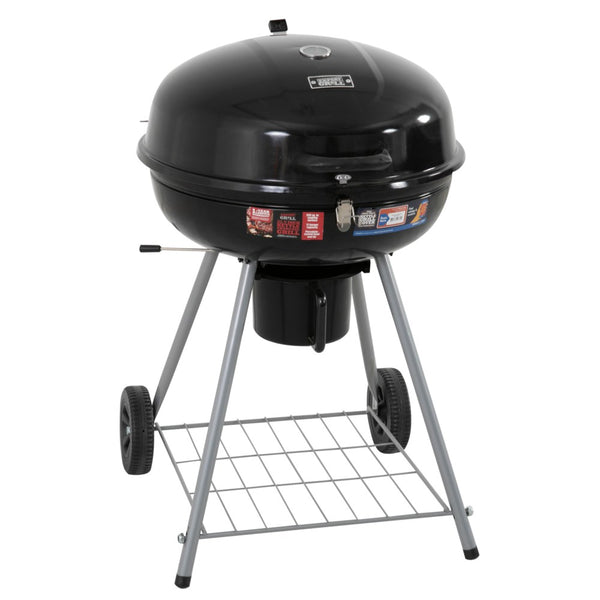
- Kettle or charcoal. Bank lit coals on both sides, set a foil tray between them, put the bird over the tray and hold 180 to 200°C with the vents. The Grillz portable charcoal roaster is a kettle with a lid thermometer, adjustable vents and a 56 cm cooking area, room for a chicken and the potatoes. More charcoal BBQs.
Herb-butter roast chicken, potatoes and gravy, oven or BBQ
This is our everyday roast chook, and it works the same in a fan-forced oven or on any barbecue with a lid. It feeds four with leftovers from a size 18 or 20. Two things make the difference: salting the bird ahead so the skin dries and crisps, and a herb butter pushed under the skin so the breast stays moist while the thighs catch up. The potatoes cook in the same tray and soak up the drippings.
| Stage | Time |
|---|---|
| Prep | 25 minutes, plus heating the oven or barbecue |
| Cook | About 1 hour 20 minutes for a size 18 in a 180°C fan oven, or about 1 hour 10 minutes on a barbecue at 190 to 200°C |
| Rest | 10 to 15 minutes, while the potatoes finish |
| Serves | 4 |
Cooking more than one bird: use one tray per bird, leave a hand's width of air between them, and plan on about 10 minutes longer. Probe every bird, not just one.
Ingredients
- 1 whole chicken, size 16 to 20
- 2 teaspoons sea salt flakes, plus extra for the potatoes
- 60 g soft butter
- 2 tablespoons chopped parsley, plus the leaves from 3 sprigs of thyme
- Finely grated zest of 1 lemon, then the lemon halved
- 1 head of garlic: 2 cloves crushed, the rest cut across the middle
- 1 kg potatoes, such as Dutch cream or sebago, cut into large chunks
- 2 tablespoons olive oil
- 1 brown onion, cut into thick rounds
- ½ cup (125 ml) chicken stock or water, for the tray
- Freshly ground black pepper
For the gravy
- 2 tablespoons plain flour
- About 1½ cups (375 ml) chicken stock, or water with the tray juices
- A splash of white wine or a squeeze of the roasted lemon (optional)
No fresh herbs? Use about 1 teaspoon of dried for every tablespoon of fresh, and mix it into the soft butter 10 minutes ahead so it softens.
Method
- Dry and salt the bird. Pat the chicken dry with paper towel. Do not rinse it: the Food Safety Information Council warns that washing raw chicken spreads bacteria around the sink and bench. Rub the salt over the skin and inside the cavity, then leave it uncovered on a plate on the bottom shelf of the fridge overnight, or for at least an hour.
- Make the herb butter. Mash the butter with the parsley, thyme, lemon zest, crushed garlic and plenty of pepper.
- Butter under the skin. Starting at the cavity end, slide your fingers between the skin and the breast meat to make a pocket, working gently so the skin does not tear. Go as far as the top of each thigh. Push two-thirds of the butter into the pocket and press the skin from outside to spread it evenly. Rub the rest over the legs.
- Heat the oven or barbecue. Oven: 180°C fan-forced, or 190°C conventional. Barbecue: set it up for indirect cooking as described above and bring it to 190 to 200°C with the lid down.
- Build the tray. Toss the potatoes with the oil and a good pinch of salt. Lay the onion rounds and the halved garlic head in the middle of a roasting tray, pour in the stock, and put the potatoes around the edge. Push the lemon halves into the cavity, tuck the wing tips under the back, tie the legs together and sit the chicken on the onions, breast up.
- Roast. Oven: middle shelf. Barbecue: over the unlit part, lid down. If you have a leave-in probe, push it into the thigh before the bird goes in and set an alert at 75°C. Turn the potatoes once halfway. If you like, spoon the tray juices over the bird at about 30 minutes and again at 1 hour, then leave it shut until the first check time for its size in the table.
- Check, rest and finish the potatoes. When the thigh and the breast both read 75°C, lift the chicken onto a board to rest for 10 to 15 minutes. Turn the oven up to 220°C, or open the barbecue vents or burners until the lid reads about 220°C, and give the potatoes 10 to 15 minutes more while the bird rests. Lift the potatoes into a serving dish and keep the tray for the gravy.
- Make the gravy, then carve. Follow the gravy steps below while the chicken rests. They take about 10 minutes, which is just as long as the rest.
Gravy from the roasting tray
- Separate the fat. Tip the tray juices into a jug and let them sit for a minute so the fat floats. Spoon about 2 tablespoons of that fat back into the tray and set the rest aside. Keep the dark juices under the fat: that is your flavour.
- Cook the flour. Put the tray over medium heat: the stovetop if your tray can take it, or a side burner or the hot side of the grill outside. Sprinkle in the flour and stir it into the fat for 1 to 2 minutes, until it bubbles, smells nutty and turns light golden.
- Add the liquid slowly. Top the saved juices up with stock to about 1½ cups. Add it a splash at a time, whisking or scraping the base after each one, so the brown bits lift and no lumps form. Add the wine now if you are using it.
- Simmer. Let it bubble gently for 3 to 5 minutes, until it coats the back of a spoon. Squash in a few cloves of the soft roasted garlic, then season and strain it if you want it smooth.
Fixes: whisk out lumps or sieve them; thin it with stock; thicken it with a teaspoon of cornflour in a tablespoon of cold water. Leave burnt-black juices out, because they turn the gravy bitter.
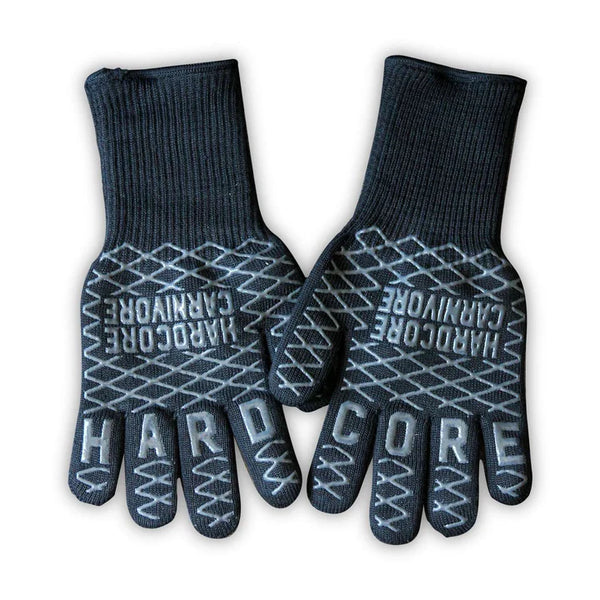
Moving a hot tray off a barbecue is a job for proper gloves, such as our Hardcore Carnivore high-heat gloves. On a barbecue the potatoes brown best on the side nearest the heat, so swap the tray end for end when you turn them.
Chicken pieces: breasts, thighs, drumsticks and wings
Boneless pieces are thin enough to grill straight over the heat. Anything with a bone gets a few minutes over the heat for colour, then moves to the indirect side with the lid down so the meat by the bone catches up. The times are from Weber Australia's poultry barbecuing chart (except the skewers), and every piece finishes at 75°C in its thickest part, clear of the bone. In a 200°C fan oven, bone-in pieces take a similar 30 to 40 minutes.
| Cut | Size | Method and heat | Time |
|---|---|---|---|
| Breast, boneless and skinless | 175 to 225 g | Direct, 200 to 230°C, turn once | 15 to 20 minutes |
| Thigh fillet, boneless and skinless | About 115 g | Direct, 200 to 230°C, turn once | 8 to 10 minutes |
| Thigh, bone in | 140 to 175 g | 3 to 5 minutes direct at 200 to 230°C, then indirect at 190 to 230°C | 23 to 35 minutes in all |
| Drumstick | 75 to 115 g | 3 to 5 minutes direct, then indirect | 23 to 35 minutes in all |
| Maryland (thigh and drumstick) | 300 to 340 g | 3 to 5 minutes direct, then indirect | 23 to 35 minutes in all |
| Wing | 70 to 75 g | Indirect, 190 to 230°C | 25 to 35 minutes |
| Chicken mince burger | 2 cm thick | Direct, 200 to 230°C | 10 to 12 minutes |
| Chicken skewers (our figure) | 2.5 cm cubes of thigh or breast | Direct, 200 to 230°C, turning every few minutes | 10 to 14 minutes |
A boneless breast dries out fast past 75°C, so check early and lift it the moment it gets there. Thighs, drumsticks and wings are forgiving, and many cooks run them hotter on purpose to soften the connective tissue.
Butterflied, halved and small birds, including Cornish hen
Cut the backbone out with kitchen scissors and press the bird flat, and you have a butterflied chicken, often sold as spatchcocked. With no cavity to heat and the thighs level with the breast, it cooks faster and more evenly. These are our own planning times, scaled from the whole-bird figures, in a 200°C fan oven or on a barbecue.
| Bird | Weight | Method and heat | Time |
|---|---|---|---|
| Butterflied chicken | 1.6 to 1.8 kg | Skin side up, indirect at 190 to 200°C, lid down | 45 minutes to 1 hour |
| Chicken halves | 800 to 900 g each | Skin side up, indirect at 190 to 200°C, lid down | 40 to 50 minutes |
| Spatchcock or poussin, whole | About 500 g | Indirect at 190 to 200°C, lid down | 30 to 40 minutes |
| Cornish hen (Cornish game hen), whole | 0.5 to 1 kg (1.1 to 2.2 lb) | Oven at 200°C fan (400°F), or indirect at 190 to 200°C on a lidded barbecue | About 35 minutes at 500 g, up to 50 to 55 minutes at 1 kg; done at 75°C |
What is a Cornish hen here? It is the American name for a small, young chicken. Australian butchers sell the same bird as a spatchcock or poussin, and at the heavy end as a small size 10 chicken, so a US recipe that calls for Cornish hens works with any of those. Allow one per person, or half each from a 1 kg bird. Being small, a Cornish hen overshoots quickly, so probe the thigh from about the 30-minute mark and lift it at 75°C, the same Food Safety Information Council finish as every other row. Butterflied birds of any size finish well over the heat: once the thigh is near 70°C, flip it skin down for a few minutes to crisp, then read it again before it comes off.
Poultry cooking times: turkey and duck
Turkey and duck follow the chicken rule: indirect with the lid down, and done at 75°C in the thickest part, the Food Safety Information Council's line for any poultry. Rows marked Weber are Weber Australia's barbecue figures; the others are our own starting points.
| Bird or cut | Weight | Method and heat | Time |
|---|---|---|---|
| Whole turkey, not stuffed (Weber) | 4 to 5 kg (9 to 11 lb) | Indirect, 190 to 230°C | 1¾ to 2¼ hours |
| Whole turkey, not stuffed (Weber) | 5 to 6 kg (11 to 13 lb) | Indirect, 190 to 230°C | 2¼ to 2½ hours |
| Whole turkey, not stuffed (Weber) | 6 to 7 kg (13 to 15 lb) | Indirect, 190 to 230°C | 2½ to 3 hours |
| Whole turkey, not stuffed (ours) | 8 to 10 kg (18 to 22 lb) | Indirect, 180 to 200°C, on a large grill | 3 to 4 hours |
| Turkey breast, boneless and rolled (Weber) | 1 to 1.2 kg (2.2 to 2.6 lb) | Indirect, 190 to 230°C | 1 to 1¼ hours |
| Turkey breast steak, boneless (ours) | 1.25 cm thick | Direct, 200 to 230°C, turn once, then rest 3 minutes | 6 to 8 minutes in all |
| Turkey or chicken mince burger (ours) | 2 cm thick | Direct, 200 to 230°C, turn once | 10 to 14 minutes |
| Whole duck (Weber) | 1.6 to 2.2 kg (3.5 to 4.9 lb) | Indirect, 210 to 240°C | 1 to 1¼ hours |
| Duck legs (maryland), cut from the bird (ours) | About 300 g each | Skin side up, indirect at 180 to 190°C over a tray; they go on first | 50 minutes to 1 hour; fine past 75°C |
| Duck breast, skin scored (Weber) | 300 to 340 g | Goes on for the legs' last half-hour: 2 minutes skin down over direct heat, then indirect at 190 to 230°C | 20 to 25 minutes indirect; off at 75°C |
| Duck wings (ours) | About 100 g | Indirect at 190 to 200°C | 35 to 45 minutes |
Duck drips a lot, so it always goes over a tray; prick the skin all over without piercing the meat so the fat can run out. Mince burgers must reach 75°C right through with no pink, because mixing spreads surface bacteria into the middle. A turkey goes on fully thawed. For a turkey over 7 kg, where Weber's chart stops, run 180 to 200°C, start checking half an hour before the short end, tent the breast if it colours early, and make sure the bird clears the lid with a few centimetres of air all round. For the full Christmas line-up in one chart, see our meat temperature chart in Celsius.
Rotisserie, beer-can and smoked chicken times

On the spit. A turning bird bastes itself. A size 16 to 18 takes about 1 hour on a kamado spit at 180°C with the dome shut, about 45 minutes per kilo under a gas hood, and 1½ to 2 hours on an open charcoal spit. Method, trussing and balancing are in our kamado rotisserie chicken recipe. The JoeTisserie for the Classic Joe fits between base and dome with a 240 V motor and is listed for up to 5 kg, enough for two size 18 chickens on one rod.
Standing up, beer-can style. Upright, the legs hang into the hotter part of the barbecue while the breast sits higher, so the bird cooks evenly. Use the barbecue column of the weight table and plan on the long end, because the stand and its liquid take heat too. The Kamado Joe ceramic chicken stand holds up to 16 oz (about 470 ml) of beer, stock or cider and carries a bird up to 5 lb (about 2.3 kg), in any kamado or charcoal grill. Check the lid clears the top of the bird.
Smoked, low and slow. At 120 to 135°C, a size 16 to 18 takes about 2½ to 3½ hours to reach 75°C; that is our starting point, so go by the probe. Expect a pink ring under the skin, which is normal, and soft skin, so many cooks smoke at 160 to 175°C instead or finish hot for the last 10 to 15 minutes. Chicken takes smoke fast: a few chunks of fruit wood or pecan is plenty. See our smokers and smoking wood.
Basting, resting, foil and stuffing
Basting. Spooning tray juices over the bird adds colour and flavour to the skin but not moisture to the meat; taking it out at 75°C does that. Twice is plenty, at about 30 minutes and 1 hour, because each opening costs heat. Stop for the last 20 minutes so the skin can crisp, and skip it on a spit or a dry-salted bird.
Rest it. Give a whole chicken 10 to 15 minutes on the board so the juices settle and it carves cleanly. It is already safe at 75°C, so the rest is about texture.
Foil or no foil. Roast uncovered, because foil traps steam and softens the skin. If the breast is colouring ahead of the meat, tent it loosely and take the foil off for the last 20 to 30 minutes. A loose tent while it rests is fine.
Stuffing. The stuffing in the middle is the last part to heat, so we bake ours in a dish beside the bird. If you do stuff it, pack it loosely, add 15 to 30 minutes and probe the centre of the stuffing as well as the thigh: both need 75°C, the Council's figure for stuffed roasts.
How to carve a roast chicken
- Legs. Breast up, legs towards you. Cut the skin between leg and breast, bend the leg back until the joint pops, and cut through it. Split each leg at the joint into thigh and drumstick.
- Wings. Pull each out and cut through the joint at the body.
- Breasts. Cut down one side of the breastbone, keeping the knife on the bone, and lift the breast off in one piece. Slice it across, about 1.5 cm thick, so every slice keeps some skin.
- The oysters. Turn the frame over and pull off the two small nuggets near the thighs, the best bites on the bird. Keep the frame for stock.
A short, stiff blade makes it easy: the Tramontina Nomade 6-inch boning knife works around the joints and follows the breastbone.
Leftovers, stock and what to serve
Strip the meat while it is warm and get it into the fridge within 2 hours, in shallow containers. The NSW Food Authority's leftovers guide says to eat refrigerated leftovers within 3 days, freeze them for up to 3 months, reheat them until steaming hot, and bin anything out of the fridge for more than 4 hours in total. For stock, break the roasted frame into pieces, cover it with about 2.5 litres of cold water with an onion, carrot, celery and a bay leaf, skim it, and keep it just below a boil for 2 to 3 hours. Strain and chill it within the same 2 hours. On the side, tray potatoes are the classic; mash, roast pumpkin, greens or corn grilled while the bird rests, and a sharp green salad or coleslaw all sit well with it.
Roast chicken nutrition per 100 g
From the Australian Food Composition Database (Release 3), kept by Food Standards Australia New Zealand, for chicken baked with no added fat, per 100 g cooked. The butter, potatoes and gravy are extra.
| Cut, baked | Energy | Protein | Fat |
|---|---|---|---|
| Breast, with skin | 808 kJ | 27.8 g | 9.1 g |
| Breast, meat only | 637 kJ | 29.0 g | 3.9 g |
| Thigh, with skin | 987 kJ | 23.1 g | 16.1 g |
| Drumstick, with skin | 993 kJ | 28.5 g | 13.6 g |
Our take
Oven or barbecue, what changes the result is the thermometer, not the cooker. Probe the thigh and the breast every time and take the bird out at 75°C. In summer, roast outside: any barbecue with a lid and a way to keep the flame to one side does the oven's job without heating the house. Browse our BBQ accessories and Kamado Joe accessories for the rest of the kit.
Frequently asked questions
How long does it take to roast a chicken in the oven?
About 40 to 50 minutes per kilo in a 180°C fan-forced oven, or 190°C in a conventional one. A size 16 (1.6 kg) takes roughly 1 hour 5 minutes to 1 hour 20 minutes and a size 20 (2 kg) about 1 hour 20 minutes to 1 hour 40 minutes. Start checking at about 35 minutes per kilo, and take it out when the thickest part of the thigh and the breast both read 75°C.
How long does it take to roast a whole chicken on the BBQ?
Allow 35 to 45 minutes per kilo with the lid down at 180 to 200°C on indirect heat. A size 16 (1.6 kg) takes about 55 minutes to 1¼ hours and a size 20 (2 kg) about 1 hour 10 minutes to 1½ hours. Start checking at about 30 minutes per kilo, and take it off when the thigh and the breast both read 75°C.
How long do you cook a 1.5 kg chicken?
In a 180°C fan oven, about 1 hour to 1¼ hours, with the first check at about 50 minutes. On a lid-down barbecue at 180 to 200°C, about 55 minutes to 1 hour 10 minutes, first check at 45 minutes. Either way it is done at 75°C in the thigh and the breast.
How long do you cook a 2 kg chicken?
In a 180°C fan oven, about 1 hour 20 minutes to 1 hour 40 minutes. On a lid-down barbecue, about 1 hour 10 minutes to 1½ hours; Weber Australia gives 1¼ to 1½ hours for a 2 to 2.5 kg bird at 190 to 230°C. Start checking at about 1 hour 5 minutes and finish at 75°C in the thigh and the breast.
What temperature should roast chicken be cooked to inside?
75°C in the thickest part, measured with a meat thermometer. That is the Food Safety Information Council's figure for all poultry, and it clears the NSW Food Authority's 74°C. Probe the inner thigh near the breast without touching bone, then the thickest part of the breast, and do not count on the rest to finish it.
Should I roast chicken at 180°C or 200°C?
Either works. At 200°C the skin browns and crisps better and the bird lands at the short end of its time. At 180°C there is more margin if your oven or barbecue runs hot, and the breast is less likely to dry out. A good middle path is 15 minutes at 220°C to set the skin, then 180°C, and let the probe decide.
What is 180°C fan-forced in a conventional oven?
Roughly 190 to 200°C. A fan cooks faster, so set a fan-forced oven 10 to 20 degrees lower than a conventional one for the same result. Ingham's pairs 180°C fan with 190°C conventional for its whole chickens.
Should I cover a roast chicken with foil?
Not while it roasts, unless the skin is browning faster than the meat is cooking. Foil holds steam against the skin and softens it. If the breast is going too dark, lay foil loosely over it and remove it for the last 20 to 30 minutes. A loose tent while it rests is fine.
How long does a butterflied (spatchcocked) chicken take?
About 45 minutes to 1 hour for a 1.6 to 1.8 kg bird, skin side up, at 190 to 200°C on an indirect barbecue with the lid down, or in a 200°C fan oven. Take it off at 75°C in the thigh and the breast.
How long do you roast a Cornish hen?
About 35 minutes for a 500 g bird and 50 to 55 minutes for a 1 kg bird, in a 200°C fan oven or at 190 to 200°C on a lidded barbecue with indirect heat. In Australia the same bird is sold as a spatchcock or poussin. It is done at 75°C in the thickest part of the thigh.
Why is my chicken pink near the bone when it reads 75°C?
Colour is not proof either way, as the NSW Food Authority points out. Meat near the bone of a young bird can stay pink after it is fully cooked, and smoked chicken often has a pink ring under the skin. If the thermometer reads 75°C in the thickest part, clear of the bone, the chicken is cooked.
How long should roast chicken rest?
10 to 15 minutes for a whole bird, on a board, uncovered or under a loose foil tent. Pieces need only 3 to 5 minutes. The chicken is already safe at 75°C when it comes out, so the rest is to settle the juices and make carving easier.
What are roast chicken temperatures in Fahrenheit?
Roast at 350°F (180°C) in a fan oven or 375°F (190°C) without the fan, or at 350 to 400°F (180 to 200°C) on a lidded barbecue. The bird is done at 75°C, which is 167°F, in the thickest part of the thigh and the breast. In pounds, allow about 18 to 23 minutes per lb in the oven.
Can I roast a chicken from frozen?
No. Thaw it right through first. The Food Safety Information Council asks that frozen poultry is defrosted to the centre before cooking, in the fridge or the microwave. A whole chicken needs a day or more in the fridge, in a container on the bottom shelf.