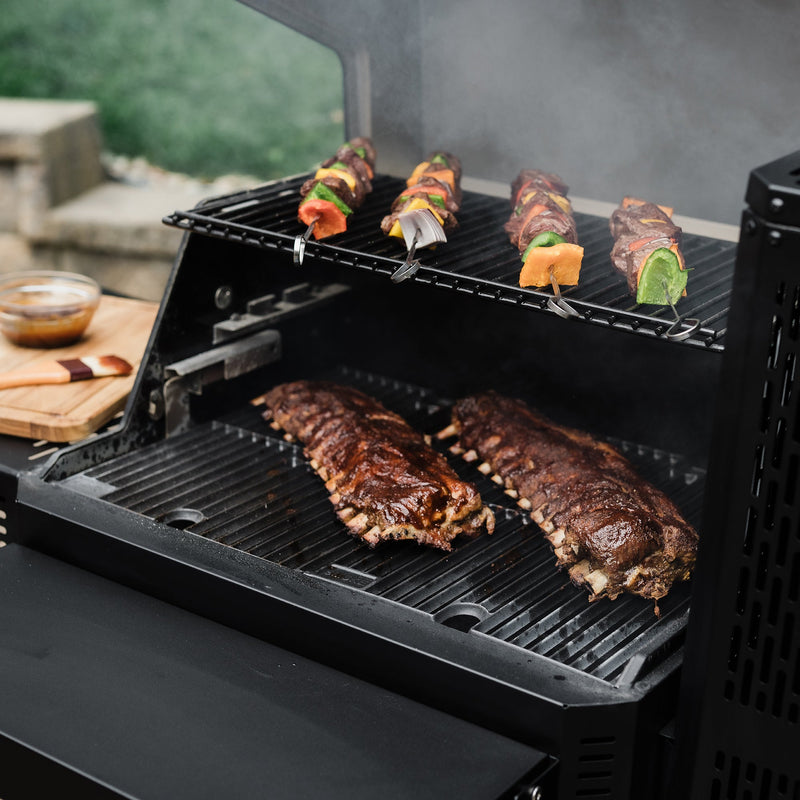
The best cuts of meat for BBQ depend on how you are cooking them. For hot and fast grilling, scotch fillet is the best all-round steak: well marbled, forgiving and full of flavour, with rump as the value pick. For low and slow smoking, brisket is the classic, while pork shoulder is the easiest and cheapest place to start. On the lamb side, cutlets and a butterflied leg are hard to beat. With chicken, choose thighs over breast, and wings for a cheap crowd-pleaser. And every Aussie BBQ needs a tray of good snags. Below is our cut-by-cut guide using the names Australian butchers use, with how to cook each one, which BBQ suits it, the cheap cuts that eat like dear ones and the safe temperatures to cook to, all in Celsius.
| If you want | Buy this | Cook it |
|---|---|---|
| The best steak for a BBQ | Scotch fillet (rib eye), 3 to 4 cm thick | Hot and fast, or reverse seared if it is thick |
| A great steak for less | Rump, or a chuck eye steak | Hot and fast, sliced across the grain |
| The classic low and slow cook | Whole beef brisket | Smoked at 110 to 125°C for most of a day |
| An easy first smoke | Pork shoulder or pork neck | Smoked at 110 to 120°C until it pulls apart |
| Lamb that everyone likes | Lamb cutlets, or a butterflied leg for a crowd | Cutlets hot and fast, the leg over medium heat with the lid down |
| Chicken that stays juicy | Bone-in thighs or marylands | Medium heat, skin side down first |
| Feeding a big crowd cheaply | Pork shoulder, chicken wings and drumsticks, sausages | Low and slow for the shoulder, medium heat for the rest |
How to choose a BBQ cut: tender or tough
Every cut on a butcher's tray falls into one of two groups, and the group tells you how to cook it.
- Tender cuts come from muscles that do little work, mostly along the back: the rib, sirloin and fillet in beef, the loin in lamb and pork. They have little connective tissue, so they are at their best cooked quickly over high heat and eaten pink. Cook them for hours and they only get drier.
- Tough cuts come from hard-working muscles: the chest, shoulder, neck and legs. They are full of collagen, the connective tissue that makes them chewy if you grill them like a steak. Held at a low temperature for hours, that collagen melts into gelatine and the meat turns soft and juicy. These are the low and slow cuts, and they are usually the cheapest in the cabinet.
Fat matters as much as tenderness. Fine white flecks through the muscle, called marbling, melt as the meat cooks and keep it moist, which is why scotch fillet is more forgiving on a grill than eye fillet, and why a fatty pork shoulder is so hard to ruin. So before you buy, answer three questions: how are you cooking (hot and fast on a grill, or low and slow in a smoker or hooded BBQ), how many people are you feeding, and how much do you want to spend. The rest of this guide is sorted the same way.
Whatever you buy, a thermometer does more for the result than anything else. An instant-read probe tells you when a steak or chop is ready: our magnetic digital thermometer is the budget option, and the Hark Rapid and FireBoard Spark read faster. A leave-in wireless probe such as the FireBoard Pulse watches a brisket or shoulder for you over a long cook. The full range is in our BBQ thermometers collection.
BBQ meat cuts chart: every cut at a glance
The cooker temperatures are what we run at home. The last column is a guide to when the meat is ready; the safe minimums are further down, and our meat temperature chart has the full take-off list.
| Cut | How to cook it | BBQ temperature | Ready when | Smoke wood |
|---|---|---|---|---|
| Scotch fillet (rib eye) | Hot and fast, or reverse sear | 250°C and up to sear | To taste; 54 to 57°C is medium rare | Optional; a little ironbark or oak |
| Porterhouse (sirloin) and T-bone | Hot and fast | 250°C and up | To taste | Optional |
| Rump and rump cap | Hot and fast, or reverse sear for a whole cap | 250°C and up; 110 to 120°C for the slow stage | To taste, then slice thin | Ironbark, box gum |
| Eye fillet | Sear, then indirect | Hot to sear, 160 to 180°C to finish | Pull early; it dries out past medium | Optional |
| Flank, skirt, flat iron | Marinate, then very hot and fast | As hot as the BBQ goes | Medium rare to medium, sliced thin across the grain | None needed |
| Brisket | Low and slow smoke | 110 to 125°C | Probe slides in like butter, usually 90 to 96°C | Ironbark, box gum, oak |
| Beef short ribs, chuck | Low and slow smoke | 120 to 135°C | Probe-tender, usually 93 to 98°C | Ironbark, box gum, oak |
| Pork shoulder or neck | Low and slow, pulled | 110 to 120°C | Just over 90°C and probe-tender | Apple, cherry, pecan |
| Pork ribs | Low and slow | 110 to 125°C | Racks bend and the meat cracks on the surface | Apple, cherry, pecan |
| Pork belly | Low and slow, or roasted for crackling | 120°C for burnt ends; hot for crackling | Soft when probed | Apple, cherry |
| Pork cutlets and scotch steaks | Medium-hot grill | 200 to 230°C | 63°C and a rest, or 71°C for medium | Optional |
| Lamb cutlets, loin chops, backstrap | Hot and fast | 230°C and up | Pink in the middle | Optional |
| Butterflied leg of lamb | Lid down, medium heat | 180 to 200°C | 60°C off the heat for pink | Box gum, cherry |
| Lamb shoulder | Low and slow, pulled | 120 to 135°C | 93 to 98°C and probe-tender | Box gum, cherry |
| Chicken thighs, marylands, wings | Medium heat, lid down | 180 to 200°C | Cooked through to 74 to 75°C | Apple, cherry, pecan |
| Whole chicken | Spatchcocked, roasted or on a spit | 180 to 200°C | 74 to 75°C in the thigh and breast | Apple, cherry |
| Sausages and burgers | Medium heat, not flat out | Medium on a grill or plate | Cooked through to 71 to 75°C | Not needed |
The best beef cuts for grilling
These are the cuts for a hot grill or flat plate. Buy them thick: a steak of 3 to 4 cm gives you time to build a dark crust before the middle overcooks, where a thin one goes grey before it browns.
Why the sear matters: the Maillard reaction
The brown crust on a good steak is not burning. It is the Maillard reaction, a chain of reactions between the proteins and natural sugars on the surface of the meat that creates hundreds of new flavour compounds and that deep brown colour. It only gets going properly once the surface is dry and well above the boiling point of water, which is why a wet steak on a lukewarm grill steams and turns grey instead. Three habits follow from it: pat the meat dry, salt it early enough that the surface dries out again, and get the grate or plate properly hot before the meat goes on. It is also why the reverse sear works so well on thick cuts. Cook them gently first, then finish over the hottest part of the fire so the crust forms in a minute or two a side without overcooking the middle. Our guide to reverse searing steaks on a kamado walks through it step by step.
Scotch fillet (rib eye): the best all-rounder
Scotch fillet is the boneless eye of the rib, and it is our pick if you can only buy one steak. It has the most marbling of the common steaks plus a seam of fat through the middle that melts on a hot grill, so it stays juicy even if you go a little past medium. Sold on the bone it is a rib eye or, cut thick, a tomahawk. A big bone-in rib eye is a great cook for two or three people to share, done low first and seared hard at the end.

Porterhouse (sirloin) and T-bone
Porterhouse, also sold as sirloin or New York strip, is leaner than scotch fillet with a firmer bite and a strip of fat along one side. Leave that fat on while it cooks, cut through it every few centimetres so the steak does not curl, and render it on the grill before turning the steak flat. A T-bone is a porterhouse with a section of eye fillet on the other side of the bone. The fillet side cooks faster, so keep it towards the cooler side of the grill.
Rump: the best value steak
Rump has more beefy flavour than any other grilling steak and costs less than both of the above. It is a little chewier, so cook it no further than medium and slice it thinly across the grain to serve. A whole piece of rump is also the best thing to cut up for kebabs.
Rump cap (picanha)
Rump cap is the triangle of meat on top of the rump with a thick layer of fat across it. In Brazil it is called picanha and cut into thick slices, bent into a C, and cooked on skewers over coals. On a backyard BBQ, score the fat in a criss-cross pattern, salt it well and either grill it as thick steaks fat-side first or cook the whole cap slowly at 110 to 120°C, then sear the fat until it is crisp. The fat bastes the meat the whole time, which is why it is so hard to dry out.
Eye fillet (tenderloin)
Eye fillet is the most tender cut on the animal and the most expensive, but it has very little fat and a mild flavour. It suits people who want soft over beefy. Sear it hard, then finish it on the cooler side with the lid down, and take it off a few degrees early; past medium it turns dry. A whole fillet, tied so it is an even thickness, makes a great Christmas centrepiece.
Flank, skirt, flat iron and tri-tip
These are the butcher's cuts. Flank and skirt are thin, coarse-grained and packed with flavour; marinate them, cook them as hot as your BBQ will go for a few minutes a side and slice them very thinly across the grain, which is what keeps them tender. Flat iron, cut from the shoulder blade, is surprisingly tender for its price and grills like a regular steak. Tri-tip, from the bottom of the sirloin, is common in the US but you may need to order it; treat it like a small rump cap.
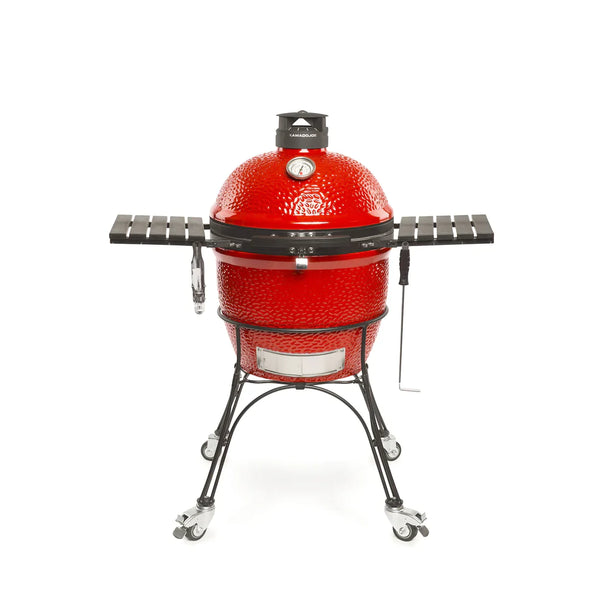
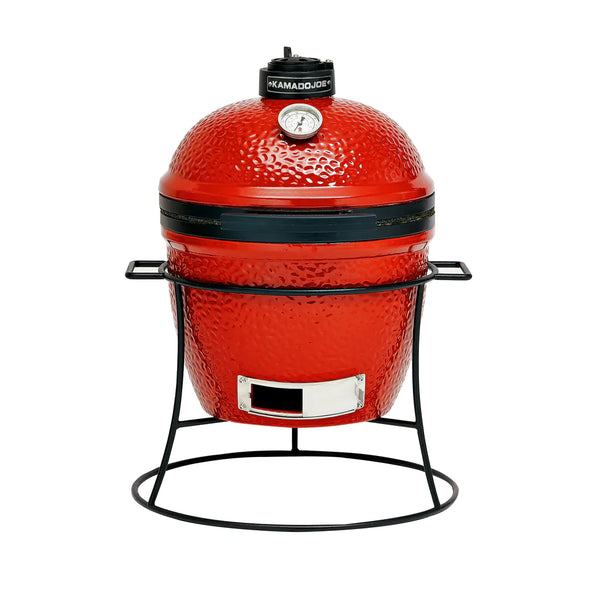
For that hard sear you need a lot of heat in one spot. A kamado such as the Classic Joe Series II, or the smaller Joe Jr, gets very hot with the vents open, and the cast iron sear plate in the photo above gives Classic Joe and Joe Jr owners a ridged surface that holds that heat and keeps drips away from the coals. On gas, the EuroGrille 5 burner has four 13 MJ/h main burners, a cast iron enamel plate and a stainless grill, so one side can run flat out while the other stays gentle. Browse more in our kamado and gas BBQ ranges.
The best beef cuts for low and slow
These cuts need hours at a low temperature to break down, so they belong in a smoker, a kamado set up for indirect heat, or a hooded BBQ with the burners down low. They are the cuts most people mean when they say barbeque meat in the American sense: smoked, with a dark crust called bark.
Brisket
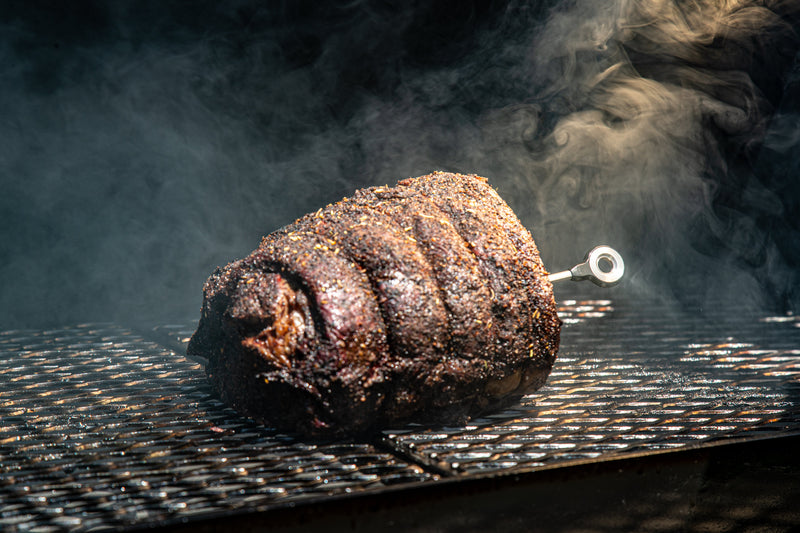
Brisket is the chest muscle, and a whole one, sometimes called a packer, weighs around 4 to 7 kg. It is made of two parts: the lean, flat end, which is the part you slice, and the fattier point on top, which stays juicier and is used for burnt ends. Trim the hard fat to an even 5 mm or so, season it with salt and pepper and smoke it at 110 to 125°C. Allow roughly 1 to 1½ hours per kilo plus at least an hour's rest, but go by feel, not the clock: it is ready when a probe slides into the flat with almost no resistance, usually somewhere between 90 and 96°C. Brisket is the hardest of the common cuts to get right, so it is a better third or fourth smoke than a first. If you are buying one, ask for a full brisket with the point still on; a flat on its own dries out easily.
Chuck: the budget brisket
Chuck comes from the shoulder and has the same rich flavour and connective tissue as brisket at a lower price. A thick chuck roast smoked like a brisket and then sliced or pulled is one of the best-value cooks you can do, and it takes a few hours less. A chuck eye steak, cut from the end closest to the rib, is often called the poor man's rib eye because it shares a muscle with scotch fillet. Some butchers cut it on request.
Beef short ribs
Beef ribs are the showpiece of a low and slow cook: thick bones with a deep layer of meat on top. Ask for chuck ribs or plate ribs, cut three or four bones wide. Season them simply, smoke them at 120 to 135°C and take them off when the probe goes in easily between the bones, usually 93 to 98°C. Thinly cut Korean-style ribs across the bone are another way to buy the same meat, and they grill in minutes after a marinade.
For a long beef cook, a stable temperature and steady smoke matter more than anything else. An offset burns wood the traditional way: the Hark Chubby has 3,775 cm² of main cooking area, and the Hark Wrangler is a reverse-flow design that pushes heat under a baffle plate for even temperatures end to end. If you would rather not feed a fire every 45 minutes, a gravity-fed charcoal smoker holds its temperature with a digital fan: the Masterbuilt Gravity Series 600 runs up to 18 hours on a hopper load and still reaches about 370°C to sear, and the bigger Gravity Series 1150 has 7,419 cm² of cooking area for a crowd. A pellet grill feeds itself: the Oakford 715 has a 10 kg hopper and the Oakford 875 Pro a 14.55 kg one. Our smokers range has every style side by side. For smoke, the dense Australian hardwoods are a natural match with beef: ironbark has a bold flavour and burns for a long time, and box gum gives a medium to strong smoke. Our guide to Australian smoking hardwoods covers the rest. When the brisket comes off, a long slicer cuts clean slices through the bark without tearing the meat: the Tramontina 12-inch brisket knife has a grooved blade, and the Hardcore Carnivore 25 cm is serrated.
The best pork cuts for the BBQ
Pork is the most forgiving meat for low and slow cooking and good value for the grill. It takes fruit-wood smoke well, so reach for apple, cherry or pecan before the heavy eucalypts.
Pork shoulder and pork neck: for pulled pork
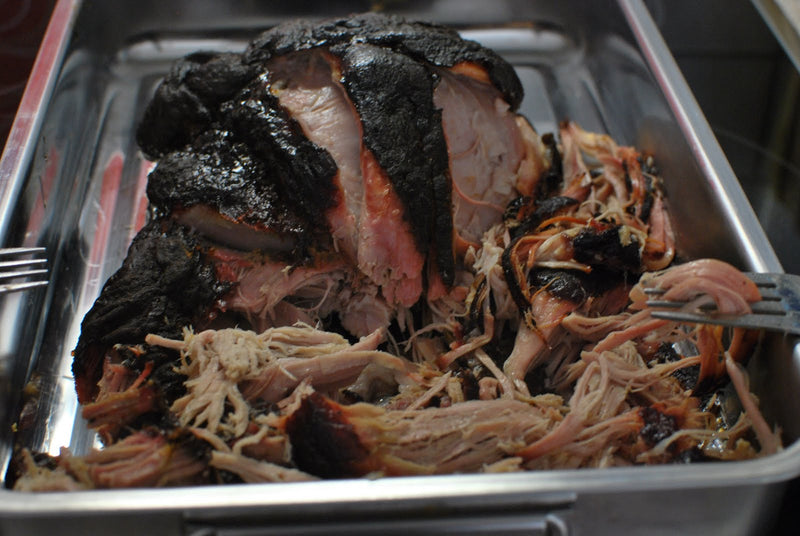
Shoulder is the best first cut for a new smoker. It is fatty, cheap and almost impossible to dry out, and the timing is relaxed: you can hold a cooked shoulder wrapped in an esky for hours. Buy a bone-in shoulder of about 3 kg, or pork neck (also sold as pork scotch), which is the well-marbled top of the shoulder and the Australian equivalent of what American recipes call a Boston butt. Smoke it at 110 to 120°C for 8 to 10 hours, until it is just over 90°C and the probe slides in easily, then pull it with two forks or a pair of claws.

Pork ribs: spare ribs and baby backs
Australian butchers sell two main types. Spare ribs, cut from the belly side and often labelled American-style ribs, are bigger and fattier with more flavour; trimmed square, they are sold as St Louis cut. Baby back ribs, also called loin ribs, come from higher up near the spine and are leaner, smaller and quicker to cook. Pull the thin membrane off the back of the bones, season, and smoke at 110 to 125°C until the rack bends easily when you lift it from one end and the surface starts to crack. Spare ribs take about 5 to 6 hours and baby backs closer to 4. A pair of folding rib racks stands the racks on edge so three or four fit where two would lie flat. Our electric smoker ribs guide walks through a full cook.
Pork belly
Belly is layers of fat and meat, so it rewards both slow and hot cooking. Cut into cubes and smoked at around 120°C, then glazed, it makes pork belly burnt ends. Roasted whole with dry, scored skin over high heat, it gives crackling; our guide to pork crackling on a charcoal BBQ has the method.
Pork cutlets, chops and scotch steaks
These are the quick pork cuts, and the risk is cooking them dry. Buy them at least 2.5 cm thick, salt them an hour before, or soak them in a simple brine of salt, sugar and water for a few hours, and grill them over medium-high heat. Take them off when they reach 63°C in the centre and rest them for a few minutes. Pork scotch steaks, cut from the neck, have the most marbling and stay juiciest.
The best lamb cuts for the BBQ
Lamb is as Australian as the BBQ itself, and it suits every type of cooking. The fat carries a lot of its flavour, so leave some on.
- Cutlets and French racks. The tender rib chops, best cooked fast over high heat and served pink. A whole rack can be roasted with the lid down at about 200°C.
- Loin chops. The T-bone of lamb, with a bit of fillet on one side. Grill them hot and render the fat strip on the edge.
- Backstrap (lamb loin). Lean and boneless. Cook it quickly, rest it, and slice it; overcooking is the only way to spoil it.
- Butterflied leg. A boned leg opened out flat, which cooks in under an hour with the lid down at 180 to 200°C and feeds eight or more. Marinate it in garlic, lemon and rosemary, and take it off at about 60°C for pink.
- Lamb shoulder. The low and slow lamb cut. Smoked at 120 to 135°C until it reaches 93 to 98°C, it pulls apart like pork.
- Forequarter chops and lamb ribs. The budget lamb cuts. Forequarter chops are fatty and flavoursome on a hot grill; lamb ribs (lamb breast) are cheap, rich and excellent smoked low and slow, then crisped over the coals.
Our lamb cooking temperatures and times guide has the doneness numbers and roasting times for every lamb cut.
The best chicken cuts for the BBQ
Chicken thighs are the best cut for the BBQ. The dark meat has more fat than breast, so it stays juicy over direct heat and is very hard to overcook; bone-in, skin-on thighs or marylands (thigh and drumstick together) are the best of all. Cook them over medium heat, skin side down first until it is crisp, then move them to the cooler side with the lid down to cook through.
- Wings and drumsticks are the cheapest chicken in the cabinet and make great snacks. Our quick method is below.
- Breast is lean and dries out quickly. Pound it to an even thickness, or brine it, and take it off the moment it reaches temperature.
- Chicken ribs, the small strips cut from the top of the breast, are another cheap, fast cook; our chicken ribs recipe has the details.
- Whole chicken cooks most evenly when you cut out the backbone and flatten it (spatchcock), or on a spit. A rotisserie keeps it basting in its own juices, and the Kamado Joe Big Joe rotisserie turns one over charcoal. Our kamado rotisserie chicken recipe has the method, and our spit rotisseries are for bigger cooks.
Quick recipe: sticky glazed BBQ wings
Wings are the best argument that a cheap cut can beat a dear one. This is how we do them for a crowd.
- You need: 1 kg chicken wings, 1 teaspoon salt, 1 teaspoon baking powder (not baking soda), a few grinds of pepper, and about half a cup of a sweet, sticky BBQ sauce for the glaze. We like Three Little Pigs Touch of Cherry or their Competition sauce; with neither to hand, stir together 3 tablespoons tomato sauce, 2 tablespoons honey, 1 tablespoon cider vinegar and 1 teaspoon smoked paprika.
- Serves: 4 as a snack. Cook: about 40 minutes.
- Cut each wing at the joints into a drumette and a flat, and keep the tips for stock. Pat them very dry with paper towel.
- Toss them with the salt, baking powder and pepper. The baking powder dries the skin and helps it blister and crisp. If you have time, leave them uncovered on a rack in the fridge for a few hours.
- Set the BBQ up for indirect heat at about 200°C: coals to one side on charcoal, or the burners under the wings off on gas. Add a chunk of cherry, apple or pecan for a light smoke if you like.
- Cook the wings on the cool side with the lid down for about 30 minutes, turning once, until the skin is golden and the fat has rendered.
- Brush them with the sauce and cook for another 5 to 10 minutes so it sets into a sticky glaze. Sauce goes on last because the sugar burns if it goes on early.
- Check the thickest drumette away from the bone. Wings are safe at 74°C, but they are better taken a little higher, to around 80°C, so the skin and the connective tissue around the joint fully render.
The same method works for drumsticks; give them 15 to 20 minutes longer before the glaze.
Sausages, burgers and the rest
A good butcher's sausage is still the most popular thing on an Australian BBQ. Buy thick sausages with a high meat content, take them out of the fridge 20 minutes before cooking, and cook them over medium heat, turning often. Do not prick them; that only lets out the fat that keeps them juicy. If the outside is browning faster than the middle is cooking, move them to the cooler side and close the lid. For burgers, use mince with some fat in it, about 20 percent, shape patties slightly wider than the bun with a dimple in the middle so they stay flat, and turn them once. Anything made from mince must be cooked through to the centre.
Cheap BBQ cuts that eat like dear ones
Some of the best things you can cook on a BBQ are the cheapest cuts in the cabinet. What they need is time or a little technique, not money.
| Cheap cut | Why it is good | How to cook it |
|---|---|---|
| Chicken wings and drumsticks | Lots of skin and fat, and very cheap | Indirect heat at about 200°C, glaze at the end (our method) |
| Pork shoulder or neck | Feeds a crowd for little money and is hard to ruin | Low and slow, pulled |
| Beef chuck | Brisket flavour at a much lower price | Low and slow, sliced or pulled |
| Chuck eye or flat iron steak | Tender, well marbled steaks for less | Hot and fast, to no more than medium |
| Rump and rump cap | The most flavour of any grilling steak | Hot and fast, sliced thin; reverse sear for a whole cap |
| Lamb forequarter chops | Fatty, rich and quick to cook | Hot grill, fat edge first |
| Lamb ribs and lamb shoulder | Rich and full of flavour when slow cooked | Low and slow, crisped at the end |
| Pork belly | Two great results from one cut | Low and slow for burnt ends, hot for crackling |
The cheap tough cuts are where a smoker pays for itself. A shoulder or a chuck roast cooked for hours turns out better than most steaks, and it feeds far more people for the money.
Australian and American cut names
Most BBQ recipes online are American, and a few of the cuts go by different names here. Take this to the butcher.
| Australian name | American name |
|---|---|
| Scotch fillet | Ribeye (boneless) |
| Rib eye or rib on the bone | Bone-in ribeye, cowboy steak |
| Porterhouse or sirloin | New York strip, strip steak |
| Eye fillet | Tenderloin, filet mignon |
| Rump | Top sirloin (roughly) |
| Rump cap | Picanha, top sirloin cap |
| Topside and silverside | Top round and bottom round |
| Pork neck or pork scotch | Boston butt, pork butt |
| Pork forequarter or picnic roast | Picnic shoulder |
| American-style pork ribs | Spare ribs |
| Pork loin ribs | Baby back ribs |
| Beef mince | Ground beef |
How to buy good BBQ meat
- Look for marbling. Fine, even white flecks through a steak mean more flavour and more margin for error. Thick, hard lumps of fat between muscles are different; they do not melt on a quick cook.
- Check the grading. Meat Standards Australia, a program run by Meat & Livestock Australia, grades beef and sheepmeat for eating quality based on consumer taste testing, taking in the cut, ageing and cooking method. An MSA label is a useful sign of consistency, especially for steaks.
- Grass or grain fed. Grain-fed beef is usually more marbled and milder; grass-fed is leaner with a stronger, beefier taste. Both cook well. With leaner grass-fed steaks, cook them a little less.
- Buy thick and even. Steaks at least 3 cm, chops at least 2.5 cm, and a brisket or shoulder of even thickness so it cooks at the same rate end to end.
- Look and smell. Beef should be red to deep red and lamb pink to light red, with firm, dry-looking fat. Avoid meat that is sticky or smells off. Meat in a vacuum pack can look darker and smell a little when opened; that passes after a few minutes in the air.
- Talk to a butcher. They can cut steaks to the thickness you want, trim a brisket, order a rump cap or chuck ribs, and butterfly a leg of lamb.
How much meat per person
These are our planning figures for raw weight per adult when the meat is the main course with sides. Allow more for big eaters, less for kids.
- Boneless steak, backstrap or chicken thigh fillets: 200 to 300 g.
- Bone-in chops, cutlets or chicken pieces: 300 to 400 g.
- Sausages: two or three each, more if they are the main event.
- Brisket, pork shoulder and other low and slow cuts: about 400 g raw, because they lose close to half their weight in a long cook.
- Pork ribs: half a rack of spare ribs, or more of baby backs. Beef short ribs: one big bone each.
Preparing and cooking each cut
Trim, salt and season
Cut off thick, hard fat that will not render and loose flaps that will burn, but leave an even layer on low and slow cuts to protect the meat. Salt is the most important seasoning: on steaks and chops, salt either at least 40 minutes before cooking or right before they go on, and for a big cut, salt it the night before and leave it uncovered in the fridge so the surface dries and browns well. Pat everything dry before it hits the grill; a dry surface is what lets the Maillard browning start straight away. A simple rub of salt and coarse pepper is all a good brisket needs.
Marinate, brine or inject
A marinade is a flavour step, not a fix for a tough cut. Most of it stays in the outer few millimetres of the meat, so it does the most for thin cuts with plenty of surface and very little for a thick roast. Salt is the part that travels furthest, which is why a marinade with salt in it, or a simple brine, does more for juiciness than one without. Our rough timings:
| Cut | How long | Why |
|---|---|---|
| Prawns and fish | 15 to 30 minutes | Acid in the marinade starts to cook delicate flesh and turns it mushy |
| Chicken breast, thighs and wings | 2 to 12 hours | Long enough for the salt to work; past a day an acidic mix goes soft and mealy |
| Flank, skirt, rump strips, kebabs | 2 to 8 hours | Thin, open-grained cuts take on flavour quickly |
| Pork chops, cutlets, scotch steaks | 4 hours to overnight | A brine of salt, sugar and water keeps lean pork juicy |
| Butterflied leg of lamb | Overnight | Opened flat, it has the surface area for a marinade to matter |
| Brisket, pork shoulder, whole chickens | Dry brine overnight, or inject | Too thick for a marinade to reach the middle |
| Scotch fillet, porterhouse, eye fillet | Not needed | Salt and a hot grill do more for a good steak |
- Always marinate in the fridge, covered, in a glass or plastic dish or a zip-lock bag, never on the bench. The NSW Food Authority's BBQ food safety advice is to keep raw meat cold until it goes on, keep it apart from cooked and ready-to-eat food, and never pour a marinade that has had raw meat in it over food that is ready to eat: cook it on the hotplate until it sizzles, or throw it out. If you want some as a sauce, set a portion aside before the meat goes in.
- Go easy on acid and sugar. Citrus, vinegar and wine help flavour but turn the surface mushy over a long soak. Sugar, honey and sauce burn over direct heat, so wipe off the excess before grilling, or add a sweet glaze in the last few minutes, as in the wings recipe above.
- Pat it dry before it goes on. A wet, marinated surface steams before it browns, so blot it with paper towel for a better crust.
- For thick cuts, inject. A meat injector puts a thin, salty liquid straight into the middle of a pork shoulder, brisket or whole chicken in a few minutes, where a marinade would need days and still not get there. The Hark Fat Boy holds 60 ml per fill; work it in a grid across the cut and keep the needle away from the bone. Strain out herbs and spice that would block the needle, and keep the injected meat in the fridge until it goes on.
Set up two zones
The most useful thing you can do on any BBQ is to have a hot side and a cool side. On charcoal, push the coals to one side; on gas, run some burners high and leave others low or off. Sear over the hot side and move the meat to the cool side with the lid down to finish without burning. For low and slow cooks, all the meat goes on the cool side, or into a smoker where it never sits over the fire.
Rest, then slice across the grain
Rest steaks and chops for a few minutes, roasts for 10 to 20 minutes, and briskets and shoulders for at least an hour, wrapped and kept in an esky. Then look for the lines of muscle fibre running through the meat and cut across them, not along them. It is the difference between a tender slice of rump, skirt or brisket and a chewy one. A sharp knife helps, and our knives range has boning knives for trimming and slicers for the table.
Doneness and safe temperatures
The NSW Food Authority gives these safe internal temperatures, measured in the thickest part away from the bone:
| Meat | NSW Food Authority safe temperature |
|---|---|
| Beef, veal, lamb and pork (whole cuts) | 63°C for medium rare, with at least 3 minutes resting; 71°C for medium; 77°C for well done |
| Minced meat and sausages | 71°C |
| Chicken and turkey (whole, thighs, wings, legs, breasts) | 74°C |
| Fish | 63°C |
| Leftovers | 60°C |
The Authority's BBQ food safety advice also says that whole pieces of red meat, such as steak, can be cooked to taste, because the bacteria are on the surface and a hot sear kills them. Mince, sausages, poultry and rolled or stuffed roasts are different: they must be cooked right through. Our meat temperature chart rounds chicken, sausages and rolled roasts up to 75°C to give a little margin, and lists when to take each roast off so it finishes on the right number as it rests.
For steak, cooks generally aim for these finished temperatures after the rest: about 50 to 52°C for rare, 54 to 57°C for medium rare and 60 to 63°C for medium. Take a steak off the grill a few degrees before your target, because it keeps rising on the board. Even a budget magnetic digital thermometer takes the guesswork out of it.
Which BBQ suits which cut
| BBQ | Best for | Where to look |
|---|---|---|
| Gas BBQ | Steaks, chops, snags, burgers, chicken pieces, butterflied lamb | Gas BBQs |
| Kamado | Everything: very hot searing, roasts, and low and slow with a deflector | Kamados |
| Charcoal grill or kettle | Steaks and chops over coals, two-zone roasts, wings | Charcoal BBQs |
| Offset smoker | Brisket, beef ribs, pork shoulder, ribs, all on real wood | Smokers |
| Gravity-fed charcoal | Low and slow without tending a fire, plus hot searing | Masterbuilt |
| Pellet grill | Set-and-forget smoking, roasts, reverse-seared steaks | Pellet smokers |
| Electric or gas cabinet smoker | Ribs, pork shoulder, chicken, smoked sausages; not for searing | Smokers |
For fuel, a good lump such as Kamado Big Block XL handles both a hard sear and a long low cook, and our smoking wood and fuel range has chunks and pellets to match each meat. Hot grates and coals call for proper BBQ gloves.
Our take
If you are grilling, buy a thick scotch fillet or rump, dry it, get the BBQ very hot and use a thermometer; that beats an expensive steak cooked by guesswork every time. If you are smoking, start with a pork shoulder before you spend money on a brisket, then work up to beef ribs and brisket once you can hold a steady 110 to 125°C. For a crowd on a budget, a shoulder, a tray of glazed wings and a few kilos of good snags will feed more people better than steak. The cut decides how you cook, and the BBQ you own decides which cuts are easy. If yours only does one of hot and fast or low and slow, our BBQ range is the place to look for the other.
Frequently asked questions
What are the best cuts of meat for BBQ?
For grilling, scotch fillet is the best all-round steak, with rump as the value choice, along with lamb cutlets, chicken thighs and good sausages. For low and slow smoking, brisket is the classic, and pork shoulder is the easiest and cheapest to start with. Choose the cut to suit your BBQ: tender cuts for hot and fast, tough cuts for low and slow.
What is the best cut of steak for the BBQ?
Scotch fillet, also called rib eye. Its marbling and central seam of fat keep it juicy over high heat and make it forgiving if you go slightly past your target. Buy it 3 to 4 cm thick. Rump has more beefy flavour for less money but is a little chewier, and porterhouse sits in between.
What cut is a poor man's rib eye?
The chuck eye steak. It is cut from the end of the chuck closest to the rib, where it shares a muscle with scotch fillet, so it has similar marbling and flavour for much less. Not every butcher cuts it, so ask. Flat iron steak, also from the shoulder, is another cheap and tender option.
What is the 3-3-3 rule for grilling steak?
It is a rule of thumb for a steak about 2.5 cm thick on a very hot grill: 3 minutes on the first side, 3 minutes on the second, then 3 minutes on the cooler side or resting off the heat. It gets you close to medium rare, but steaks vary in thickness and grills vary in heat, so check with a thermometer: about 54 to 57°C after resting for medium rare.
Why does a steak need a hot sear?
Because the flavour of the crust comes from the Maillard reaction, the browning between proteins and sugars on the surface, and it only happens fast once the surface is dry and much hotter than boiling point. A wet steak or a grill that is not hot enough steams the meat grey instead. Searing does not seal in juices; it builds flavour.
What is the cheapest good cut of meat for the BBQ?
Chicken wings and drumsticks are the cheapest, and they are great cooked on indirect heat and glazed at the end. Pork shoulder is the best value for a crowd, and beef chuck gives you brisket flavour for less. For a cheap steak, try rump, chuck eye or flat iron, sliced across the grain.
Can you cook brisket on a gas BBQ?
Yes, on a hooded BBQ with at least three or four burners. Light one or two burners on low, put the brisket over the unlit side, add wood chips in a smoker box or a foil pouch over the lit burner, and keep the hood temperature around 110 to 125°C. Many gas BBQs struggle to run that low and steady for 10 hours or more, so a gas or electric cabinet smoker, a pellet grill or a kamado is easier.
What is the best meat to BBQ for a big crowd?
Pork shoulder. One 3 kg shoulder feeds around eight people as a main and can be cooked the day before, and it holds hot in an esky for hours. Add a butterflied leg of lamb, glazed chicken wings or drumsticks and a few kilos of sausages, which all cook quickly and are cheap per head.
What is the best BBQ meat for beginners?
On the grill, chicken thighs, sausages and a thick scotch fillet are the most forgiving. For a first smoke, pork shoulder is the clear choice: it has so much fat it rarely dries out, and the timing is flexible. Leave brisket until you have a few long cooks behind you.
How long should you marinate meat for the BBQ?
For chicken and thin beef cuts such as skirt and flank, 2 to 12 hours is plenty; for pork chops and a butterflied leg of lamb, overnight. Seafood needs only 15 to 30 minutes. Always marinate in the fridge, and never reuse a raw-meat marinade on cooked food unless you have cooked it until it sizzles. For a thick brisket or shoulder, a marinade cannot reach the middle, so dry brine it overnight or use an injector.
Should you take meat out of the fridge before you BBQ it?
For steaks and chops, 20 to 30 minutes on the bench does little to the temperature in the middle, so it is optional; patting the meat dry and salting it matters more. Do not leave raw meat out in the heat for long; the NSW Food Authority advises keeping raw meat cold until it is cooked. Big low and slow cuts can go straight from the fridge into the smoker.
What wood should you use to smoke beef, pork and chicken?
Dense Australian hardwoods such as ironbark and box gum suit beef and lamb, with oak as a milder option. Fruit woods such as apple and cherry, and nut woods such as pecan, give a lighter, sweeter smoke that suits pork, chicken and seafood. Use a few chunks at the start of the cook rather than a constant heavy smoke.