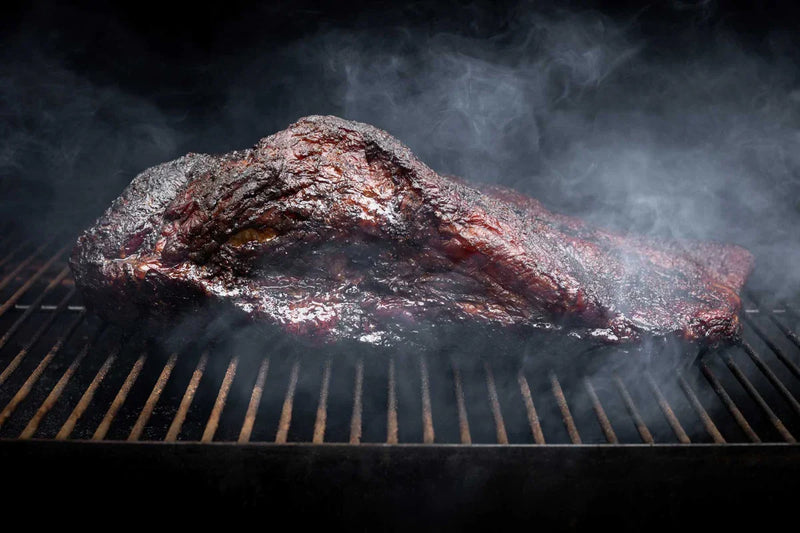
Good BBQ pork ribs come down to two choices: how much time you have, and what you are cooking on. On a weeknight, a hooded gas barbecue does it in about two hours: the racks braise in sealed foil over the unlit burners until they are tender, then get glazed over a low flame until the sauce goes sticky. On a weekend, a smoker, kamado, kettle or pellet grill takes them low and slow at 107 to 120°C for four and a half to six hours, and the bark and smoke flavour are the reward. Short on time altogether? Marinated, cut-down ribs cook straight on the grill in about 45 minutes. All three methods are below, with our own rub, a from-scratch barbecue sauce, times for each cooker and how to tell when ribs are done. Every temperature is in Celsius.
| At a glance | Weeknight gas BBQ | Low and slow | Quick grill |
|---|---|---|---|
| Cooker | Any gas barbecue with a hood and at least 3 burners | Smoker, kamado, kettle, pellet grill or offset | Any barbecue with a hood |
| Prep | 20 minutes (rub overnight if you can) | 20 minutes, plus lighting the fire | 15 minutes, plus 4 hours to overnight in the marinade |
| Cook temperature | 140 to 150°C under the hood, then low direct heat to glaze | 107 to 120°C, then 135°C to set the sauce | 160 to 180°C under the hood |
| Cook time | About 1¾ hours, plus 10 minutes' rest | About 4½ hours (baby backs) to 6 hours (spare ribs) | About 40 to 45 minutes |
| Texture | Tender, a clean bite off the bone | Tender with a smoky bark | Sticky and charred, with more chew |
| Serves | 4, from 2 racks | 4, from 2 racks | 4, from about 1.5 kg |
BBQ pork ribs recipe
This makes two racks, which feeds four as a main with a couple of sides. The rub, wrap and glaze are the same for the gas and low-and-slow methods. Only the heat and the clock change.
Ingredients
For the ribs
- 2 racks of pork ribs, about 2 kg in total (baby back or St Louis-cut spare ribs)
- 2 tablespoons American mustard or olive oil, to help the rub stick
Our pork rib rub
- 3 tablespoons brown sugar
- 2 tablespoons sweet paprika
- 1 tablespoon sea salt flakes
- 2 teaspoons garlic powder
- 2 teaspoons onion powder
- 2 teaspoons cracked black pepper
- 1 teaspoon mustard powder
- ½ teaspoon cayenne pepper (leave it out for kids)
For the wrap
- 125 ml apple juice
- 30 g butter, cut into small cubes
- 2 tablespoons brown sugar
- Heavy-duty foil
For the glaze
- 1 cup (250 ml) barbecue sauce, homemade (recipe below) or bottled
- 2 tablespoons apple juice or the juices from the foil, to thin it
Our from-scratch sauce is further down and takes 30 minutes. If you would rather buy one, Three Little Pigs Touch of Cherry is a sweet cherry and brown sugar sauce with a hickory edge that its maker pitches at ribs and pork. Its stablemate, Three Little Pigs Competition, is a classic Kansas City style: tomato, Worcestershire, sugar and a little heat.
Prepare the ribs (all methods)
- Take off the membrane. Turn each rack bone side up. Work a butter knife under the thin, shiny skin at one end, grab it with a piece of paper towel and peel it away. Left on, it turns tough and stops the rub getting in from underneath.
- Trim and dry. Cut off any loose flaps of meat or fat that hang off the edges, as they only burn. Pat both sides dry.
- Rub. Mix the rub ingredients. Smear a thin coat of mustard or oil over the racks, then press the rub on firmly, more on the meat side than the bone side. Cook after 30 minutes, or wrap the racks and leave them in the fridge overnight for deeper seasoning.
Method 1: weeknight ribs on a gas BBQ (about 1¾ hours)
- Set up for indirect heat. On a four-burner, light the two outside burners and leave the middle two off. Close the hood and adjust until the hood gauge holds 140 to 150°C. With three burners, run one end burner only and cook at the other end.
- Wrap the racks. Lay each rack meat side down on a double sheet of heavy-duty foil. Scatter over half the butter and half the sugar, splash in half the apple juice and fold the foil into a sealed parcel, seam on top so nothing leaks.
- Braise under the hood. Set the parcels over the unlit burners, seam up, and shut the hood. Give baby backs about 1¼ hours and spare ribs about 1½ hours. Resist opening the hood in between.
- Check for tender. Open one parcel at the end of its time. The meat should have shrunk back from the bone ends and a probe pushed in between the bones should slide in with little resistance and read 92 to 95°C. If it still feels tight, reseal and give it another 15 minutes.
- Glaze over the flame. Turn every burner to low. Lift the racks out of the foil (keep the juices for thinning the sauce), and lay them bone side down over the lit burners. Brush with sauce, close the hood for 3 to 4 minutes, turn, brush and repeat. Two or three coats on each side, about 15 minutes all up, gives a sticky, slightly charred finish. Stay close: the sugar in the sauce catches quickly.
- Rest and slice. Rest the racks on a board for 10 minutes, then turn them bone side up and cut between the bones.
Stage one: the parcels braise over the burners that are off. Stage two: every burner on low, racks out of the foil and straight onto the grill to glaze.
A wide hood with independent burners is what makes this work, because you can keep the flame well away from the parcels. The EuroGrille 5-burner gas BBQ has four 13 MJ/h main burners under a stainless hood, so two can run while two stay off, plus a side wok burner for a pan of corn or greens. See all our gas BBQs.
Method 2: low and slow ribs (about 4½ to 6 hours)
- Light the cooker for indirect heat at 107 to 120°C. Set it up for your cooker as shown in the table further down. Add fruit wood for smoke: two or three fist-sized chunks on charcoal, a full hopper of pellets, or chips topped up through the first few hours on a cabinet smoker.
- Smoke unwrapped. Lay the racks bone side down and close the lid. Give spare ribs 3 hours and baby backs about 2½ hours. After the first hour, mist them every 45 minutes or so with half apple juice, half cider vinegar if the surface looks dry. You are after a deep red-brown colour and a rub that has set firm.
- Wrap. Parcel the racks in foil with the butter, sugar and apple juice, as in Method 1, and return them for 1½ to 2 hours (baby backs about 1½ hours). They are ready to unwrap at 92 to 95°C between the bones.
- Sauce and set. Raise the cooker to 135°C. Unwrap, brush on a coat of sauce and cook unwrapped for 20 to 30 minutes, adding a second thin coat halfway, until the glaze is tacky to the touch rather than wet.
- Rest and slice. 10 minutes on the board, loosely tented, then cut between the bones.
Fruit woods suit pork best. Our Natural Smoke apple wood chunks give a light, sweet smoke that is hard to overdo, which makes them the easy first pick for ribs. To watch the meat without lifting the lid, a leave-in probe such as the FireBoard Pulse has no cable: one probe reads the meat (-10 to 100°C, ±0.2°C) and a second sensor reads the air around it up to 350°C, both sent to your phone over Bluetooth.

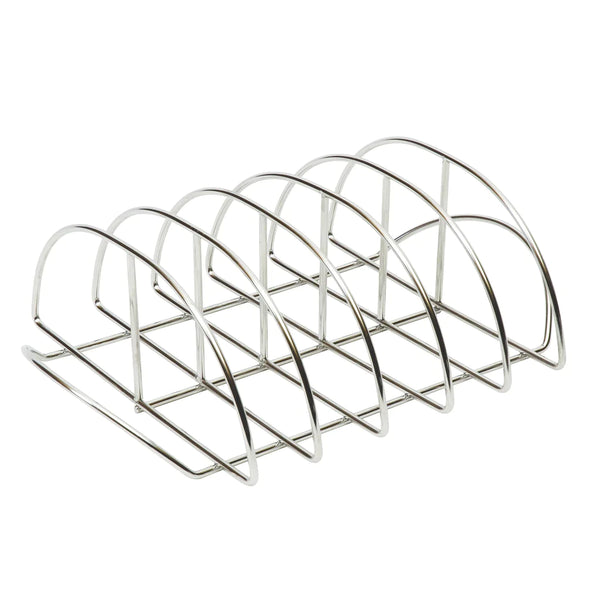
Cooking for a crowd? Standing the racks on their edge doubles what fits on the grate. The Kamado Joe stainless steel rib rack holds racks upright in three tiers and its legs fold flat to store. Smoke moves around every side of the meat, so cook them just as above and swap the outside racks with the inside ones when you wrap.

Method 3: quick honey-soy ribs on the grill (about 45 minutes)
When there is no time to braise, cut the ribs down so the heat gets through fast. Use pork belly ribs (often sold as "American-style" strips), or cut a rack of baby backs into pieces of two or three bones. They will not be as tender as the slow methods, but they come out sticky, charred at the edges and very good to eat with your fingers.
Honey-soy marinade (for about 1.5 kg of ribs)
- ½ cup (125 ml) barbecue sauce
- 3 tablespoons honey
- 3 tablespoons soy sauce
- 1 tablespoon rice wine vinegar or cider vinegar
- 2 garlic cloves, crushed
- 2 teaspoons finely grated ginger
- Marinate. Whisk everything together, set a third aside in the fridge for basting, and toss the ribs in the rest. Cover and refrigerate for at least 4 hours, or overnight.
- Heat the barbecue. Light it for medium-low heat with the hood down, aiming for 160 to 180°C on the gauge. On gas, run the burners on low to medium-low. On charcoal, keep the coals to one side so you have a cooler zone to move pieces to.
- Grill with the hood down. Shake off the excess marinade and lay the ribs on the grill. Close the hood and turn them every 8 to 10 minutes. If the edges darken too fast, shift them to the cooler side.
- Baste late. For the last 15 minutes, brush on the reserved marinade each time you turn them. Never baste with the marinade the raw meat sat in.
- Check and serve. They are cooked through once the thickest piece reads at least 71°C. Another 10 minutes past that, to around 85°C, renders more of the fat and softens them a little. Rest for 5 minutes and serve.
Homemade BBQ sauce for ribs
A sauce made from pantry staples, sharp enough to cut through the fat and thick enough to cling. It makes about 1⅓ cups, enough to glaze two racks with some left over to serve at the table.
- 1 tablespoon olive oil
- 1 small brown onion, finely grated
- 2 garlic cloves, crushed
- 1 cup (250 ml) tomato sauce
- ⅓ cup (80 ml) apple cider vinegar
- ¼ cup (55 g) brown sugar, firmly packed
- 2 tablespoons golden syrup or honey
- 1 tablespoon Worcestershire sauce
- 1 tablespoon American mustard
- 2 teaspoons smoked paprika
- ¼ cup (60 ml) apple juice
- ½ teaspoon cracked black pepper and a pinch of salt
- Warm the oil in a small saucepan over medium-low heat. Cook the grated onion for about 5 minutes until soft and pale gold, then stir in the garlic for 1 minute.
- Add everything else and whisk until the sugar dissolves. Bring it to a gentle simmer.
- Simmer uncovered for 20 to 25 minutes, stirring now and then so it does not catch on the bottom, until it coats the back of a spoon. It thickens further as it cools.
- Taste and adjust: more vinegar for tang, more golden syrup for sweetness, a pinch of cayenne for heat. For a smooth sauce, blitz it with a stick blender.
Make it a day ahead if you can, as the flavours settle overnight. Cool it, store it in a clean sealed jar in the fridge, and use it within a week. Brush it on thinly; a thick coat stays wet and slides off instead of setting.
What is the 3-2-1 method for ribs?
3-2-1 is a timing rule for spare ribs at about 107 to 110°C: 3 hours of smoke unwrapped, 2 hours wrapped in foil, then 1 hour unwrapped with sauce. It is a useful way to remember the order of the three stages: build colour and smoke, make the meat tender, then set the glaze. The last hour is the part we cut. By the time the ribs come out of the foil they are already tender, and another full hour tends to dry the surface and push them past a clean bite. We finish at 135°C for 20 to 30 minutes instead, the same numbers as our guide to smoking ribs in an electric smoker.
Bars are drawn to the same time scale. Spare ribs shown; baby backs run shorter at every stage.
Baby backs are smaller and leaner, so the stages shrink: think 2½, 1½ and a half hour. Treat every number as a starting point. The bend test and the probe between the bones decide when each stage is over, not the clock.
How to set up each type of BBQ for ribs
Ribs need indirect heat whichever way you go: the fire to one side, below a deflector or in a separate firebox, with the lid trapping the heat. Direct flame under a rack for hours just burns the sugar in the rub.
| Cooker | How to set it up | Hold at |
|---|---|---|
| Gas BBQ with a hood | Outside burners on low, ribs over the unlit middle. For a hint of smoke, sit a small foil tray of wood chips on a lit burner. | 140 to 150°C for the foil method, or as low as it will go for a smoke |
| Kettle or charcoal BBQ | Lay unlit briquettes in a long curve around one side of the charcoal grate, light a dozen at one end and let them burn along it. Wood chunks go on top, ribs on the far side. | 110 to 120°C, bottom vent nearly closed |
| Kamado | Heat deflectors in, grate above them, a few wood chunks buried in the lump charcoal. Bring it up slowly, as a kamado is easier to raise than lower. | 110 to 120°C |
| Pellet grill | Indirect by design. Fill the hopper with apple or cherry pellets and set the controller. | 107 to 110°C |
| Offset smoker | A small, clean-burning fire of split wood or charcoal and wood in the firebox, ribs at the cooler end of the chamber or rotated through the cook. | 110 to 120°C at the grate |
| Electric, gas or digital cabinet smoker | Set the temperature, fill the water bowl and feed chips or bisquettes for the first few hours. | 107°C |
Kamado
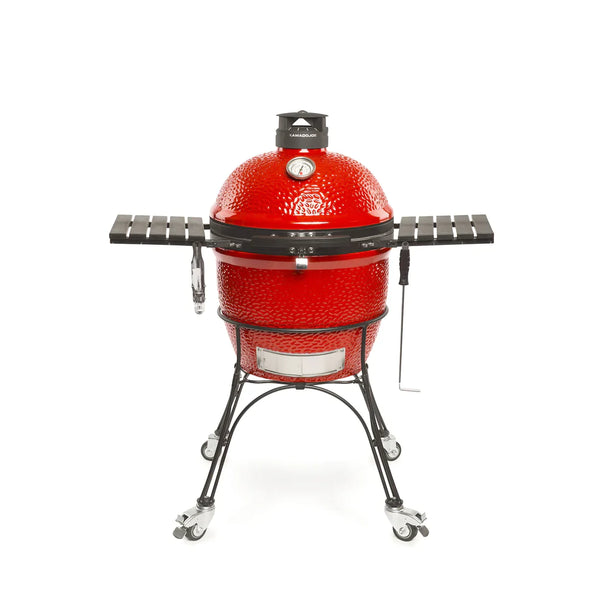
Thick ceramic walls hold a steady 110 to 120°C for a whole afternoon on one load of lump, which suits ribs perfectly. On the Kamado Joe Classic Joe II, the half-moon deflector plates fit the 18-inch Classic I, II and III and shield the meat from the coals. Browse all our kamado BBQs and Kamado Joe accessories.
Pellet grill
The simplest way to hold 107°C for six hours: the controller feeds pellets to the fire pot and you mostly leave it be. The Oakford 715 pellet grill has a 10 kg hopper, which covers a full rib cook, and a Wi-Fi and Bluetooth controller with a meat probe included. For the fuel, Asmoke 100% apple pellets or Asmoke 100% cherry pellets both suit pork. On a Green Mountain Ledge Prime 2.0, the GMG RACKT rib rack module adds rib space inside the chamber. More in our pellet smokers.
Cabinet smokers: electric, gas and Bradley
A cabinet holds its temperature with very little input from you, and the racks stack up, so it is the easiest way to do four racks at once. The Masterbuilt 710 WiFi digital electric smoker runs from 38 to 135°C, takes four racks of ribs on its four shelves, and has a side loader so you add chips without opening the door. The Bradley 4-rack digital smoker sets anywhere from 40 to 135°C and feeds its own wood bisquettes for up to 9 hours; Bradley apple bisquettes are the ones for pork. On LPG, the Hark 2-door gas smoker holds 80 to 150°C across four racks, and its lower door lets you top up chips and water without letting the heat out of the main chamber. Our electric smoker guide linked above walks through a full rib cook in a cabinet, step by step. Browse Masterbuilt and Bradley smokers.

Charcoal, gravity-fed and offset
If you want charcoal flavour without minding a fire, the Masterbuilt Gravity Series 600 feeds charcoal down from a hopper and a digital fan holds the temperature you set on its panel or app. For a traditional stick-and-charcoal cook, the Hark Chubby offset smoker has 3,775 cm² of main cooking area, enough for several racks laid flat. On a tighter budget, the Grillz 2-in-1 offset charcoal smoker pairs a charcoal grill with a side firebox. A kettle like the Grillz portable charcoal roaster, with its lid thermometer and adjustable vents, handles one or two racks with the briquette curve described above. See all smokers and charcoal BBQs.
Which ribs to buy for the BBQ
Australian butchers and supermarkets do not cut ribs to one standard, and the labels vary, so it pays to look at the rack rather than the name.
- Baby back (loin) ribs. From the top of the rib cage near the loin. Shorter, curved bones, leaner meat, and the quickest to cook. The easiest choice for a first go.
- Spare ribs. From further down, toward the belly. Longer, flatter bones with more fat between them. They take longer but stay juicier, and forgive a bit of extra time.
- St Louis cut. Spare ribs squared off, with the cartilage tips and the flap of skirt meat removed. A neat rectangle that cooks evenly from end to end. Ask your butcher if you do not see it.
- "American-style" ribs. A label more than a cut. Often these are belly ribs, sometimes sold pre-marinated in a sweet sauce. They suit the quick grill method; plain racks are better for a smoker, because a wet marinade will not form a bark.
Whatever the name, pick racks with an even layer of meat over the bones. Avoid ones trimmed so tight that bone shows through on top, and racks that are thick at one end and thin at the other, which cook unevenly.
How many ribs per person? As a main, one rack of baby backs feeds 2 to 3 people. For spare ribs, allow about 500 g raw weight per adult, a little less if there are plenty of sides.
Rub, marinade or sauce?
A dry rub is the base for low and slow. The sugar and spice form the bark and catch the smoke. The rub in the recipe above is ours: lift the cayenne for heat, or swap half the sweet paprika for smoked paprika if you are cooking on gas and want a smokier taste.
A wet marinade suits gas and quick grilling. Ribs left overnight in a sweet, salty mix such as the honey-soy one in Method 3 take on flavour right through, but the wet surface will not form a bark, and the sugar in it burns over a strong flame. Either cut them small and grill them on medium-low, or braise whole racks in foil first, as in Method 1, and glaze at the end.
Sauce goes on last. Barbecue sauce is mostly sugar and tomato, both of which scorch long before ribs are tender. Brush it on only in the last 15 to 30 minutes, in thin coats, and never over a high flame. Spoon a little warm sauce over the ribs once they are sliced too, for anyone who wants more.
Variation: Chinese-style sticky ribs
For a sweet, salty, five-spice glaze, mix 3 tablespoons hoisin sauce, 2 tablespoons honey, 1 tablespoon light soy, 1 tablespoon Shaoxing wine, 1 teaspoon Chinese five-spice, 2 crushed garlic cloves and 1 teaspoon sesame oil. Coat the racks with half of it and leave them in the fridge overnight in place of the dry rub. Cook whole racks by Method 1, skipping the butter and sugar in the foil, or cut-down ribs by Method 3, and glaze with the rest of the mix. Hoisin and honey burn faster than tomato sauce, so keep the burners at their lowest for the glaze and turn the ribs more often.
The best wood for smoking pork ribs
| Wood | What it does for ribs |
|---|---|
| Apple | Mild and sweet. The safest place to start, and hard to overdo. |
| Cherry | A little fruitier, and gives the bark a deep red colour. Lovely mixed with apple. |
| Peach | Light and fruity, similar to apple. |
| Pecan | Richer and nuttier without going harsh. Good for a stronger smoke. |
| Hickory | The classic American flavour, but strong. Use it in a 50/50 blend with apple on a long cook. |
| Ironbark and other dense Australian hardwoods | Great heat in an offset firebox but heavy-flavoured on pork. Keep a fruit wood on the coals with it. |

Match the form to the cooker. Chunks suit kettles, kamados and offsets: try cherry or pecan chunks beside the apple. Pellet grills need pellets, Bradley smokers need bisquettes, and electric and gas cabinets work best with chips. There is no need to soak chips or chunks: wet wood steams and smoulders before it smokes cleanly. For more on Australian timbers, read our guide to stringybark vs ironbark for smoke, or browse our smoking wood and fuel.
How to tell when BBQ ribs are done
Ribs are cooked safely long before they are tender. The NSW Food Authority's cooking temperatures list pork at 71°C for medium and 77°C for well done. Whole racks keep going well past that, because the tough connective tissue between the bones only softens into something you can bite through at around 90°C and above. So use three checks together:
- The bend test. Pick up the rack with tongs about a third of the way along. If it sags into a curve and the surface starts to crack, it is ready. If it stays stiff like a board, give it longer.
- The bones. The meat pulls back from the bone ends by about half a centimetre, and an inside bone turns a little when you twist it.
- The probe. Slide a thermometer into the meat between two bones in the thickest part, not touching bone. 92 to 95°C is the target. Because the meat is so thin, a reading anywhere in that range means tender, not dry.

Ribs that fall off the bone the moment you lift them have gone a bit too far. The goal is a clean bite that leaves the bone bare. A fast instant-read thermometer makes the probe check quick: the Hark Rapid instant-read reads from -50 to 300°C to within ±1°C and is IP65 rated. To track two racks at once, the Hark Smart dual-probe thermometer runs two colour-coded wireless probes. For a basic probe to keep in the drawer, our magnetic digital food thermometer has a stainless probe and a magnet to keep it on the barbecue. See the full BBQ thermometer range and our meat temperature chart.
Oven-start, BBQ-finish ribs
No hood, or short on burner space? Do the slow part indoors. Wrap the rubbed racks in foil with the butter, sugar and apple juice from the recipe, sit them on a tray and bake at 140°C for about 2 hours for spare ribs, 1¾ hours for baby backs, until they pass the bend test. They will hold in their foil for up to an hour. Take them out to the barbecue and glaze them over low heat, a few minutes a side, as in step 5 of Method 1. You lose the smoke, but you get tender, sticky ribs on any barbecue, flat-top or open grill included. This is also the easiest way to cook ribs ahead for a party.
What to serve with BBQ ribs
Ribs are rich and sweet, so the best sides bring crunch, acid or something plain to soak up the sauce. Pick two or three:
- A sharp slaw. Shredded cabbage and carrot in a vinegar and mustard dressing rather than heavy mayonnaise. It cuts through the fat better than anything else on the table.
- Corn on the cob. Brush with butter and cook it over the lit burners while the ribs braise, turning until it is charred in patches.
- Potato salad or jacket potatoes. Wrapped in foil, potatoes can bake under the hood alongside the parcels for the same hour and a half.
- Baked beans. A pot of beans with onion and a spoonful of the barbecue sauce, warmed on the side burner or in the smoker for the last hour.
- Pickles and bread. Quick pickled onions or cucumbers, plus soft rolls or grilled bread to mop up the plate.
- Something green. A leafy salad, or grilled zucchini and broccolini with lemon, for balance.
Spritzing, injecting and the tools that help
A spritz of apple juice and cider vinegar during the smoke keeps the edges from drying and helps smoke stick. A refillable 500 ml stainless steel spray bottle with a fine-mist nozzle does the job. Injecting is optional for ribs, as the meat is too thin to need it.
If you are cooking more racks than fit flat, a set of folding stainless steel rib racks (2-pack) works in an oven or on a grill and folds away afterwards. For the rest of the kit: Tramontina Churrasco tongs long enough to lift a whole rack, Hardcore Carnivore high-heat gloves for unwrapping hot foil, and a long serrated blade like the Hardcore Carnivore 25 cm slicing knife to cut cleanly through the bark between the bones. More in our BBQ tools and BBQ gloves.
Leftover ribs and reheating
Cut leftover racks into portions and get them into the fridge within 2 hours. The NSW Food Authority's leftovers advice is to eat refrigerated leftovers within 3 days, freeze them for up to 3 months and reheat until steaming hot. To reheat ribs without drying them out, wrap them in foil with a tablespoon of apple juice or water, heat them under the hood or in the oven at about 150°C for 20 to 25 minutes until hot right through, then unwrap and brush with fresh sauce for a few minutes over low heat.
Nutrition per serving (estimate)
A rough guide for one serving of the main recipe (a quarter of the batch, about 200 g of cooked meat off the bone), including the rub, wrap and about a cup of glaze shared across four. We worked it out from USDA FoodData Central figures for cooked pork ribs with lean and fat, and from standard values for the sauce ingredients. Ribs vary a lot in fat, so treat it as a ballpark.
| Per serving | St Louis or spare ribs | Baby back ribs |
|---|---|---|
| Energy | About 4,400 kJ (1,050 Cal) | About 3,550 kJ (850 Cal) |
| Protein | About 60 g | About 47 g |
| Fat | About 65 g | About 47 g |
| Carbohydrate | About 50 g, mostly sugar from the rub and sauce | About 50 g |
To lighten it, choose baby backs, trim visible fat before you rub, go easy on the glaze and fill the rest of the plate with slaw and greens.
Our take
You do not need a smoker to cook great ribs. A gas barbecue with a hood and a roll of heavy-duty foil gets you tender, sticky racks on a weeknight. What a smoker, kamado or pellet grill adds is bark and smoke flavour, and the chance to cook four racks at once without much work. Whichever you use, the thermometer and the bend test matter more than the cooker, and the sauce always goes on last. If you are buying one thing for ribs, make it a probe thermometer. Browse our BBQ accessories for the rest, or look through the Hark range for smokers and tools in one place.
Frequently asked questions
What is the best way to cook BBQ pork ribs?
Low and slow with indirect heat and a little fruit-wood smoke gives the best result: about 107 to 120°C for 4½ to 6 hours, wrapped in foil for part of it, then glazed at the end. If you only have a gas barbecue and an evening, wrap the racks in foil and braise them under the hood at 140 to 150°C, then glaze them over a low flame. Either way, take them off when the rack bends easily and reads 92 to 95°C between the bones.
How long do you cook pork ribs on a BBQ?
On a hooded gas barbecue, about 1¾ hours: 1¼ to 1½ hours in foil at 140 to 150°C, then about 15 minutes of glazing. On a smoker, kamado, kettle or pellet grill at 107 to 120°C, allow about 4½ hours for baby backs and 5½ to 6 hours for spare ribs. Marinated ribs cut into small pieces can be grilled in about 45 minutes at 160 to 180°C, though they stay chewier.
What is the 3-2-1 rule for ribs?
It is a timing guide for spare ribs at about 107 to 110°C: 3 hours of smoke unwrapped, 2 hours wrapped in foil, then 1 hour unwrapped with sauce. We shorten the last stage to 20 to 30 minutes at 135°C, because the ribs are already tender when they come out of the foil. Baby backs need less at each stage, roughly 2½, 1½ and a half hour.
Can you cook pork ribs on a gas BBQ?
Yes, as long as it has a hood. Light the outside burners, leave the ones in the middle off and cook the ribs over the unlit part with the hood down, sealed in foil so they braise until tender. Then glaze them over the burners on low. A gas barbecue without a hood can still finish ribs that were cooked in the oven first.
Can you cook ribs quickly on the BBQ?
Yes, if you cut them down. Marinate belly ribs or two-bone pieces of baby back for a few hours, then grill them with the hood down at 160 to 180°C for about 40 to 45 minutes, turning every 8 to 10 minutes and basting in the last 15. They are safe at 71°C, but taking them a little further renders more fat. Expect sticky and charred rather than fall-apart tender.
Should you wrap ribs in foil?
For most backyard cooks, yes. Wrapping traps steam and a little liquid, so the meat goes tender faster and stays moist. The trade-off is a softer bark, which is why the ribs go back on unwrapped at the end to set the sauce. Butcher paper is a middle ground that holds less steam. Leaving ribs unwrapped the whole way works too but takes longer and needs more spritzing.
Should you boil ribs before you barbecue them?
We would not. Boiling makes ribs tender, but it pulls flavour and fat out into the water and leaves the meat bland and stringy. Braising them in sealed foil with a splash of apple juice does the same tenderising job while keeping the flavour in the meat.
What temperature should pork ribs reach?
For whole racks, 92 to 95°C, measured between two bones in the thickest part. That is far above the pork safety figures the NSW Food Authority gives (71°C for medium, 77°C for well done), but ribs need the extra heat for their connective tissue to soften. Back it up with the bend test.
Do I need to remove the membrane from ribs?
Yes. The thin skin on the bone side goes leathery as it cooks and blocks the rub and smoke from that side. Lift one corner with a butter knife, grip it with paper towel and peel it off. It takes a minute.
How do you make BBQ sauce for ribs?
Soften a grated onion and some garlic in oil, then simmer them with tomato sauce, cider vinegar, brown sugar, golden syrup, Worcestershire, mustard, smoked paprika and a splash of apple juice for 20 to 25 minutes, until it coats a spoon. Our full recipe is above. Brush it on in thin coats only in the last part of the cook.
How many ribs do I need per person?
As a main, one rack of baby backs feeds 2 to 3 people, and for spare ribs allow about 500 g raw weight per adult. If ribs are one of several meats, or there are lots of sides, you can allow less.
What wood is best for smoking pork ribs?
Apple is the safest choice: mild, sweet and hard to overdo. Cherry adds colour, and pecan gives a richer smoke. Use hickory sparingly or blend it with apple, and save strong woods such as mesquite for beef. Chunks suit charcoal cookers, pellets suit pellet grills and chips suit cabinet smokers.