Pulled pork is a pork shoulder cooked low and slow until the fat and connective tissue melt and the meat falls apart under a fork. Done on a smoker it takes most of a day, but almost all of that is waiting: you rub the shoulder, hold the cooker at 110 to 120°C (230 to 250°F) with a little fruit-wood smoke, wrap it when the bark has set, and take it off when a probe slides in like it is going into soft butter, somewhere past 90°C (194°F). Below is our recipe for a 3 kg bone-in shoulder, how to set up every type of BBQ for it, what to do when the temperature stalls, how much to buy for a crowd, oven, slow cooker and pressure cooker versions for days when you cannot tend a fire, and four quick meals for the leftovers: sliders, nachos, crispy tacos and pizza.
From the Oz BBQ team at bbqs.com.au. Food-safety figures are from the NSW Food Authority and product details from each manufacturer's own listing. Last checked November 2026.
Jump to the recipe card · ingredients, method and a print button, with amounts for 12, 24 or 36 serves · work out your start time · leftover recipes
Smoked pulled pork recipe
This is our standard backyard shoulder. The rub is sweet enough to build a dark bark but not so sweet it burns over a long cook, and the vinegar sauce at the end cuts through the richness.
| At a glance | Smoked pulled pork shoulder |
|---|---|
| Cut | Bone-in pork shoulder, about 3 kg (pork neck or a boneless shoulder also works) |
| Prep | 20 minutes, plus an optional night in the fridge with the rub on |
| Cooker temperature | 110 to 120°C (230 to 250°F), indirect heat |
| Cook time | 8 to 10 hours for 3 kg bone-in, plus at least 1 hour resting. Two or three shoulders side by side take the same time as one. |
| Done when | The probe meets almost no resistance, usually 90 to 96°C (194 to 205°F) in the thickest part, and the blade bone wiggles loose |
| Serves | 12 in rolls, or 8 as a plated main with sides |
| Fuel | Charcoal, wood, pellets, electric or gas, with apple, cherry or pecan for smoke |
Ingredients
For the pork
- 1 bone-in pork shoulders, about 3 kg each, skin removed
- 2 tablespoons yellow American mustard, or peanut, canola or light olive oil
Our pulled pork rub
- ¼ cup brown sugar
- 2 tablespoons sweet paprika
- 1 tablespoon smoked paprika
- 1½ tablespoons sea salt flakes
- 1 tablespoon coarse black pepper
- 2 teaspoons garlic powder
- 2 teaspoons onion powder
- 1 teaspoon ground cumin
- 1 teaspoon mustard powder
- ½ teaspoon chilli flakes or cayenne (optional)
For the spritz and the wrap
- 1¼ cups apple juice
- ½ cup apple cider vinegar
- 2 tablespoons brown sugar (optional)
Vinegar finishing sauce
- 1 cup apple cider vinegar
- ½ cup tomato sauce
- 2 tablespoons brown sugar
- 1 teaspoon chilli flakes
- 1 teaspoon salt
- 1 teaspoon cracked pepper
Optional injection
- ¾ cup apple juice
- 2 tablespoons Worcestershire sauce
- 1 tablespoon salt
- 1 tablespoon brown sugar
You will also need heavy-duty foil or unwaxed butcher paper, a leave-in probe thermometer and a clean, dry esky for resting.
Method
- Trim the pork shoulder. Take off any skin and cut away the hard, waxy lumps of fat. Leave an even layer about 5 mm thick on the fat side, which bastes the meat as it renders. Trim off thin flaps hanging from the edges; they only dry out and burn.
- Inject (optional). Stir the injection ingredients until the salt and sugar dissolve. Push it in every 3 to 4 cm in a grid across the top, going in at an angle and squeezing slowly as you draw the needle out. It is the best insurance against a dry result if your shoulder is on the lean side.
- Rub. Mix the rub. Smear a thin coat of mustard or oil over every surface, then sprinkle the rub on heavily and pat it in. The binder only helps the rub stick: yellow mustard leaves no taste you can pick after the cook, and any neutral oil works as well. For the best flavour, sit the shoulder uncovered on a rack in the fridge overnight so the salt draws in and the surface dries. Otherwise give it 30 minutes on the bench while the cooker heats.
- Light the cooker for indirect heat at 110 to 120°C (230 to 250°F). Set it up for your BBQ using the table further down. Add smoke wood at the start: two or three fist-sized chunks on charcoal, a full hopper of fruit-wood pellets, or chips topped up for the first three or four hours on an electric or gas cabinet.
- Smoke, fat side up, and leave it alone. Put the shoulder in, push a leave-in probe into the thickest part away from the bone, and close the lid. Do not open it for the first 3 hours. After that, if the surface looks dry in patches, mist it every hour or so with 1 cup of the apple juice mixed with the cider vinegar.
- Ride out the stall. Somewhere between about 65 and 75°C (149 to 167°F) internal the temperature will stop rising, sometimes for 2 to 4 hours. This is normal. Keep the cooker steady and do not turn it up.
- Wrap when the bark has set. Once the outside is a deep mahogany colour and the rub no longer comes away when you rub it with a finger (usually 5 to 6 hours in, around 70 to 75°C inside), lay out a double sheet of foil or butcher paper, pour on the last ¼ cup of apple juice and the optional sugar, and wrap the shoulder tightly. Put it back on with the probe in.
- Cook until probe-tender. Start checking at 90°C (194°F). The shoulder is ready when the probe, or a skewer, slides in everywhere with almost no push, which for most shoulders is between 90 and 96°C (194 to 205°F). Go by feel, not the number: a shoulder that still grips the probe at 93°C needs more time.
- Rest for at least an hour. Leave it wrapped, wrap the whole parcel in an old towel and sit it in a dry esky. It will stay hot for 3 to 4 hours, which gives you a buffer if the pork finishes before your guests arrive. Keep it above 60°C (140°F) until you serve.
- Make the finishing sauce while it rests. Simmer all the sauce ingredients in a small pan for 5 minutes until the sugar dissolves, then let it cool. Any left over keeps for weeks in a jar in the fridge.
- Pull it. Unwrap over a tray to catch the juices. The blade bone should slide out clean. Pull the meat into chunks with claws or two forks, pick out any soft fat and gristle, then shred the chunks to the size you like. Pour back some of the juices from the foil, add a splash of the vinegar sauce, toss and taste for salt.
Nutrition per serve (estimate, about 125 g of pulled pork with juices and a splash of sauce, no roll or injection): about 340 kcal (1,420 kJ), 30 g protein, 21 g fat of which 7 g saturated, 7 g carbohydrate of which 6 g sugars, and 500 mg sodium. Worked out from the recipe's quantities and standard figures for cooked pork shoulder.
Cook-day planner: when to put the pork on
The question that catches most first-timers is not how to cook the shoulder, it is what time to start. Work backwards from when you want to eat, plan for the slow end of the range, and let the esky soak up any time you have left over. Here is the plan for a 3 kg bone-in shoulder and a 6 pm dinner:
| Time | Job |
|---|---|
| The night before | Trim, rub and put the shoulder in the fridge uncovered |
| 6:15 am | Light the cooker and bring it to 110 to 120°C |
| 7:00 am | Shoulder on, probe in, lid shut |
| 12:30 pm | Check the bark; wrap once it is dark and set |
| 3:00 pm | Start probing for tenderness |
| 5:00 pm at the latest | Off, still wrapped, into the esky to rest |
| 6:00 pm | Pull, sauce and serve |
The plan allows about 3⅓ hours per kilo of the largest piece, which is the slow end for a bone-in shoulder at 110 to 120°C, plus an hour's rest. Boneless pork neck usually finishes sooner. If yours is done early, it holds hot in the esky for 3 to 4 hours.

The stall, and whether to wrap
Hours in, the internal temperature parks in the high 60s or low 70s and stays there. That is evaporation: moisture reaching the surface of a big cut cools it about as fast as the cooker heats it, the way sweat cools you. It ends on its own once the surface dries, but that can take hours.
- Wrap in foil. The fastest option: trapped moisture stops the evaporation and the temperature climbs again within the hour. The bark softens, which matters less here than with brisket because it gets mixed through the meat anyway.
- Wrap in butcher paper. A middle ground. Paper breathes, so the bark stays firmer, but the stall lasts a little longer.
- Do not wrap. The best bark, and the longest cook. Plan on 1½ to 2 hours more and keep spritzing so the outside does not scorch.
Whichever you pick, only wrap after the bark has set. Wrapping too early turns the rub to paste and you lose the crust you have spent hours building.
What temperature is pulled pork done?
Pork is safe to eat long before it is ready to pull. The NSW Food Authority's cooking temperatures give 71°C (160°F) for medium and 77°C (171°F) for well-done pork. A shoulder at 77°C is cooked through but still tough, because the collagen that holds the muscles together only breaks down into soft gelatine after hours above about 70°C. That is why pulled pork goes so much further, into the 90s.
- Probe feel. The most reliable test. Push a probe or skewer into several spots; it should slide in like going into room-temperature butter.
- Temperature. Usually 90 to 96°C (194 to 205°F) in the thickest part, away from the bone. Treat the number as the point to start probing, not a finish line.
- The bone. On a bone-in shoulder, the flat blade bone should wiggle freely and pull out with a gentle tug.
A leave-in thermometer means you can watch the stall and the climb without lifting the lid. The FireBoard Pulse has no cable and reads both the meat and the air around it, sent to your phone. The Hark Smart Wireless Meat Thermometer has two colour-coded wireless probes, handy if you are smoking two shoulders. For the final check, an instant-read such as the Hark Rapid (−50 to 300°C, ±1°C, USB-rechargeable and IP65 rated) lets you probe several spots in seconds, and our magnetic digital food thermometer is a low-cost backup. See the full range of BBQ and meat thermometers, and our meat temperature chart in Celsius for every other cut.
Pulling it: claws, forks or gloves

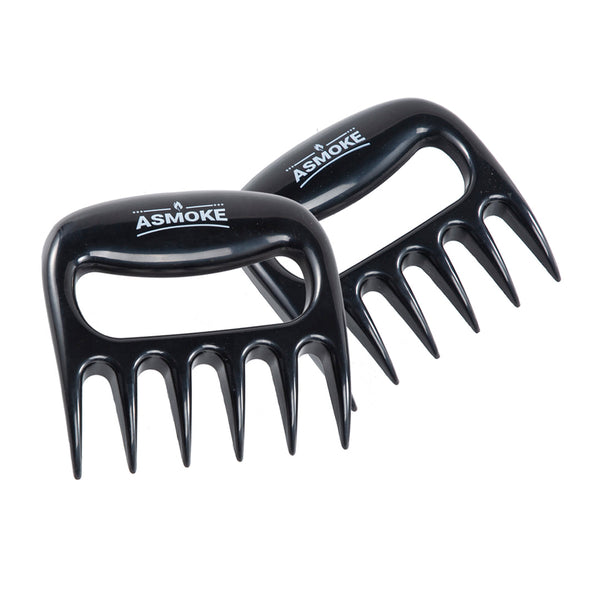
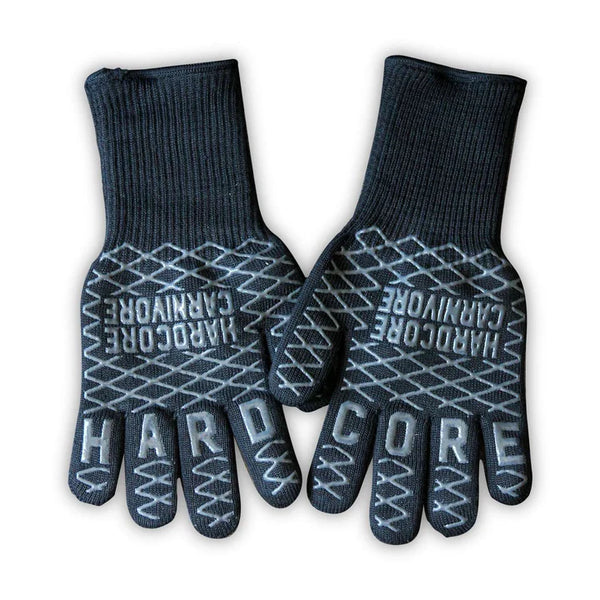
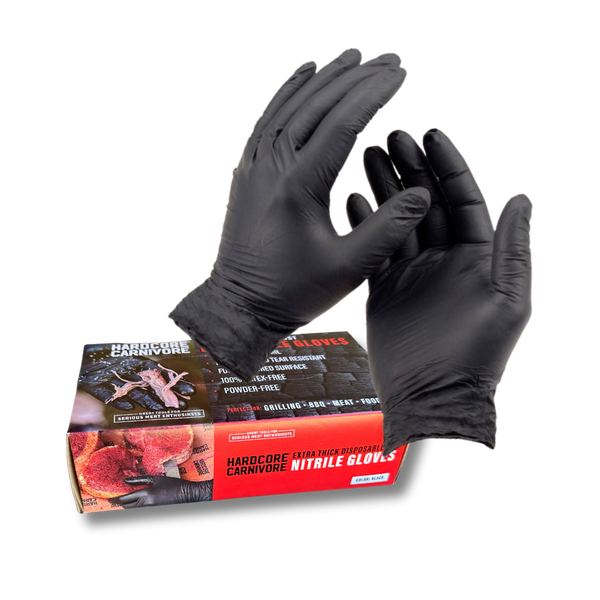
Pull while the shoulder is still hot from the esky: warm fat lets the strands separate, and cold pork tears into lumps. Pulling by hand takes a long time and the meat is hot enough to hurt. The Asmoke BBQ Meat Claws are a heat-resistant, BPA-free nylon pair that shreds a shoulder in a few minutes. The Hark Meat Shredder Claws have six prongs each, grip across the back of the hand so you can also lift the shoulder out of the tray, and go in the dishwasher afterwards. If both are sold out on the day, two large dinner forks do the same job, just more slowly. If you prefer to pull by hand, the Hardcore Carnivore High Heat BBQ Gloves are rated to 760°C, and a box of Hardcore Carnivore nitrile gloves keeps the rub and juices off your hands. More in our BBQ gloves range.
How to set up each type of BBQ for pulled pork
Pulled pork does not need an expensive smoker. It needs a lid, a way to keep the meat out of direct heat, and a cooker that can hold 110 to 120°C for most of a day.
| Cooker | Set-up | Smoke | What to watch |
|---|---|---|---|
| Kamado | Heat deflector in, drip tray on the deflector, shoulder on the top grate. Bottom vent and top vent only just open. | 3 chunks buried in the charcoal | Creeps up slowly; close vents early, before it overshoots. One load of lump easily goes 10 hours. |
| Offset smoker | Fire in the firebox, shoulder at the end of the chamber, fat side towards the firebox. | Split logs or chunks on a bed of coals | Add small splits every 45 to 60 minutes and keep the chimney fully open for clean, thin blue smoke. |
| Pellet grill | Set to 110 or 120°C on the controller. | Fruit-wood pellets; a smoke tube adds more if you want it | Fill the hopper before you start; an overnight cook can use most of it. |
| Gravity-fed charcoal | Fill the hopper, set the temperature on the panel or app. | Chunks mixed into the charcoal in the hopper | Hopper lid and ash bin must be shut or the fan cannot hold temperature. |
| Electric cabinet | Set to 110 to 120°C, water pan in, shoulder on a middle rack over a tray. | Chips through the side loader or bisquettes, first 3 to 4 hours | Easiest overnight option; finish on the grill or oven for firmer bark if you like. |
| Gas cabinet smoker | Burner on low, damper part-open, water pan in. | Chips or chunks in the smoker box, topped up through the lower door | Watch the gas bottle level; take a spare for a long cook. |
| Kettle or charcoal BBQ | Charcoal banked on one side (or a snake of briquettes around the edge), shoulder on the other side over a tray. | 2 chunks on the coals | A snake of briquettes lit at one end runs 6 to 8 hours; add fuel or finish in the oven. |
| Hooded gas BBQ | One end burner on low, the rest off, shoulder at the far end. Hood down. | Chips in a foil pouch or smoker box over the lit burner | Many hooded gas BBQs struggle to go below 140°C; at that heat, allow 6 to 7 hours and wrap earlier. |
Kamado
A kamado's thick ceramic walls hold temperature for hours on very little charcoal, so it is our favourite way to cook a shoulder overnight. The Kamado Joe Classic Joe II fits a 3 kg shoulder comfortably with room for a second, and the Kamado Joe half-moon deflector plates turn it into an indirect smoker. For 1 to 2 kg, the Kamado Joe Jr with its Joe Jr heat deflector does the job. Each has four reviews from our own customers, all five stars, though most praise the cooker and delivery rather than a specific cook. See our kamado BBQs and Kamado Joe accessories.
Offset smoker
An offset gives the deepest smoke flavour and is the most hands-on: you are feeding a fire all day. The Hark Wrangler is a reverse-flow stick burner, which sends heat and smoke under a steel baffle and back across the meat for even temperatures from end to end. On a tighter budget, the Grillz 2-in-1 Offset Charcoal Smoker combines a charcoal grill with a side firebox for around $150 to $200. The larger Hark Chubby offset is there when you are cooking for a crowd. See all our smokers and the Hark range.
Pellet and gravity-fed: set it and sleep
A pellet grill feeds itself and holds the temperature you dial in, so you can put the shoulder on at 10 pm and check it on your phone at breakfast. The Oakford 715 has a 10 kg hopper and Wi-Fi and Bluetooth control, and the Asmoke AS660N-2 carries an 11.64 kg hopper, enough pellets for a long overnight cook. The Masterbuilt Gravity Series 600 does the same with real charcoal: a hopper feeds the fire and a digital fan holds the temperature. More in pellet smokers and Masterbuilt smokers, and read how gravity-fed charcoal actually works.
Running a kamado or kettle overnight? The FireBoard 2 Drive is a six-channel Wi-Fi thermometer with built-in fan control, so a compatible 12V blower (sold separately) can hold the pit temperature while you sleep.
Electric and gas cabinets
Cabinet smokers are the easiest way into pulled pork. The Masterbuilt 710 WiFi Digital Electric Smoker sets from 38 to 135°C, fits up to four pork butts across four racks according to Masterbuilt, and has a side loader so you can add chips without opening the door. The Bradley 4-rack digital smoker feeds its own wood bisquettes, so the smoke runs unattended. On LPG, the Hark 2 Door Gas Smoker has four racks and a separate lower door for topping up chips and water without letting heat out of the main chamber.
What our customers tell us. Verified reviews on our own 710 listing are mixed. One owner who has cooked several pork joints and briskets found the meat kept running well over time and finished it in the oven, and had probe and app drop-outs. Another rates the smoker highly but runs it from the control panel because the app is unreliable. Our read: electric cabinets lose heat each time the door opens and can run cooler than the dial, so check the cabinet with a separate probe, plan on the slow end of the cook-day planner, and keep the oven finish below as your backup. See the Bradley smoker range, and our guide to smoking in an electric smoker.
Kettle, charcoal and hooded gas BBQs
A kettle-style charcoal BBQ cooks a great shoulder with the coals banked to one side, as in the photo above. The Grillz portable charcoal roaster has a lid thermometer and adjustable vents to do exactly that. A hooded gas BBQ with several burners can do it too, running one burner low: the EuroGrille 5-burner has independent burners, so the shoulder can sit well away from the flame. See charcoal BBQs and gas BBQs.
The best wood for pulled pork
Pork takes smoke well, and the sweet fruit woods are the safe, classic choice. A shoulder spends so long on the cooker that strong woods can turn bitter, so go easy on anything heavy.
- Apple: light and sweet, very hard to overdo. The best place to start. Natural Smoke apple chunks for charcoal, Asmoke 100% applewood pellets or Green Mountain Grills apple blend pellets for a pellet grill, or Bradley apple bisquettes for a Bradley.
- Cherry: a little richer than apple, and it gives the bark a deep red colour. Try Natural Smoke cherry chunks or Asmoke 100% cherry pellets.
- Pecan: mild and nutty, related to hickory but gentler. Natural Smoke pecan chunks mix well with apple.
- Hickory and Australian hardwoods: stronger. Use one chunk mixed with fruit wood rather than on their own. Our guide to Australian hardwoods for smoking covers ironbark and stringybark.
All the smoke happens in the first few hours, while the meat surface is cool and moist. There is no need to keep adding wood after you wrap. Browse all smoking wood and fuel.
Pulled pork without a smoker: oven and slow cooker
You will not get the smoke ring or a hard bark indoors, but the meat will be just as tender. Use the same trim and rub unless the method says otherwise.
Oven
- Heat the oven to 140°C (120°C fan-forced), which is about 285°F.
- Sit the rubbed shoulder on a rack in a roasting tin with 1 cup of apple juice or water in the bottom. Cover the tin tightly with foil.
- Roast for about 6½ to 7½ hours for 3 kg, uncovering for the last hour to firm up the outside, until the probe slides in easily and the bone pulls free.
- Rest, covered, for 30 minutes to an hour, then pull and toss with the pan juices.
Slow cooker, with the rub
- Cut a boneless shoulder or pork neck into 2 or 3 large pieces so it fits, and rub them.
- Sit them on a sliced onion with ½ cup of apple juice and 2 tablespoons of cider vinegar. The pork releases plenty of its own liquid, so do not add more.
- Cook on low for 8 to 9 hours, or on high for around 4½ hours, until the thickest piece reads above 90°C (194°F) and a probe slides in with no resistance.
- Lift the pork out, pull it, then skim the fat off the liquid and add back just enough to keep it moist.
Slow cooker, sauce-braised (dump and go)
The least effort of any version here: no rub, no browning, everything into the pot in one go. It comes out sweeter and saucier than the smoked recipe.
- 1.5 to 2 kg boneless pork neck or shoulder, cut into 3 pieces
- 1 brown onion, thickly sliced, and 2 garlic cloves, crushed
- 1 cup of your favourite BBQ sauce, plus extra to serve
- ½ cup salt-reduced chicken stock
- 1 tablespoon Worcestershire sauce
- Salt and cracked pepper
- Season the pork all over and lay it on the onion and garlic in the cooker.
- Whisk the BBQ sauce, stock and Worcestershire together and pour it over the top. That is all the liquid it needs.
- Lid on. Cook on low for 8 to 9 hours or high for around 4½ hours, until a probe slides in easily and reads above 90°C (194°F).
- Shred the pork on a tray. Skim the fat off the liquid, boil it for about 10 minutes if it is thin, and stir enough back through to coat the meat.
Any bottled sauce will do. If you want one made for pork, we carry Three Little Pigs Competition BBQ Sauce (a Kansas City-style tomato sauce) and Three Little Pigs Touch of Cherry, though stock of both is limited.
Pressure cooker or multi-cooker: dinner tonight
The quickest version, at about 2 hours start to finish. The texture is softer and wetter than smoked pork and there is no bark, so the grill finish below is worth doing.
- Cut 1.5 to 2 kg of boneless pork neck or shoulder into chunks about 5 cm across, so they cook evenly, and coat them with the rub.
- Brown the chunks in batches on the sauté setting, then pour in about 1 cup of liquid (apple juice and stock, or half BBQ sauce and half water). Check your cooker's manual for its minimum; most need about a cup to come up to pressure.
- Seal and cook on high pressure for 60 to 75 minutes, then let the pressure drop on its own for about 20 minutes before opening.
- Test a chunk: it should fall apart under a fork. If it resists, seal it again for another 10 to 15 minutes. Shred, then reduce the liquid on sauté until it thickens and toss it back through.
The best of both: smoke first, oven to finish
For smoke flavour on a busy day, give the shoulder 3 hours on the BBQ first, while the meat is still cold enough to take on smoke, then wrap it and finish it in the oven at 140°C (285°F). Whatever the method, a few minutes on a hot grill plate before serving gives the pulled meat crisp, caramelised edges.
Which pork cut to buy for pulled pork
Pulled pork comes from the shoulder, the hard-working front leg and shoulder of the pig. It is full of fat and connective tissue, which is exactly what makes it tender and juicy after a long cook. Australian butchers sell it under a few names:
- Pork shoulder: the whole forequarter, usually sold bone-in, often with the skin on. The classic choice.
- Pork neck, or pork scotch: the boneless, well-marbled top part of the shoulder. This is the Australian equivalent of the American "Boston butt", which despite the name has nothing to do with the rear of the pig. It cooks a little faster than bone-in and is the easiest piece to find in a supermarket.
- Picnic or forequarter roast: the lower part of the shoulder, leaner and with more skin. Fine for pulled pork, though a little less juicy.
Bone-in or boneless? Both work. The bone gives you a handy doneness test; boneless cooks more evenly and is easier to fit in a slow cooker. Avoid loin and fillet, which are too lean to pull and go dry and stringy over hours. Look for plenty of white fat marbled through the meat, between 2.5 and 4 kg for a standard smoker.
To take off the skin and trim the fat, the Tramontina Nômade 10" butcher knife has a 25 cm stainless blade that makes light work of a big shoulder. If you keep the skin, our guide to pork crackling on a charcoal BBQ shows what to do with it.
How much pulled pork per person
A shoulder loses a lot of weight on the way to the plate. Expect roughly half of the raw weight to end up as pulled meat: water and fat render out, and you lose the bone and any gristle you pick out. A 3 kg bone-in shoulder usually gives about 1.4 to 1.6 kg of pulled pork.
| Serving | Cooked meat per person | Raw shoulder per person |
|---|---|---|
| Rolls or sliders at a party, with sides | About 120 g | About 250 g |
| Plated main with two or three sides | About 180 g | About 350 g |
| Big eaters, few sides | About 225 g | About 450 g |
So 2 kg of raw pork neck feeds about 8 people in rolls, or 5 or 6 as a main. For 20 people in rolls, buy about 5 kg raw, which is usually two shoulders of 2.5 kg; for 20 people as a main, allow about 7 kg. Two smaller shoulders cook faster than one big one, and leftovers freeze well, so round up rather than down.
Sauce, sides and how to serve pulled pork

There are two schools of sauce. Vinegar sauces, like the one in our recipe, are thin and sharp and soak into the meat. They come from the Carolinas in the United States and suit pork's richness. Thick, sweet tomato-based sauces sit on top and are what most Australians picture with pulled pork. A good compromise is to toss the meat in a little vinegar sauce and the cooking juices, then let people add a thick sauce at the table. If you would rather buy one, Touch of Cherry is a sweet cherry and brown sugar sauce with a hickory note, and Competition is a classic Kansas City style with a little heat.
The classic way to serve it is in a soft brioche or milk bun with vinegar slaw and pickles. Sliders, nachos, crispy tacos and pizza each get their own short recipe further down.
What to serve on the side. Pulled pork is rich, so balance it with something sharp and something crunchy. A vinegar coleslaw is the obvious partner, in the roll or next to it. Creamy potato salad, smoky baked beans, corn on the cob, mac and cheese and a plain green salad all work, and a jar of pickles or pickled onions on the table cuts through the fat. For a crowd, two sides plus slaw is plenty alongside the amounts in the table above.
Injecting, spritzing and the tools that help
- Injecting puts moisture and seasoning deep inside the meat, where the rub cannot reach. The Hark Fat Boy Meat Injector holds 60 ml per fill and has a stainless steel needle. Inject in a grid and keep the needle away from the bone.
- Spritzing keeps the surface from drying and scorching and helps smoke stick to it. Do not start until the rub has set, or you will wash it off. Our 500 ml stainless steel spray bottle gives an even mist, and it is just as handy for oil at the grill.
For everything else, browse our BBQ tools and BBQ accessories.
What to make with leftover pulled pork
A 3 kg shoulder makes more than most families eat in one sitting. Each recipe below starts from pulled pork that has been chilled and reheated until steaming hot (see reheating), and each uses roughly 500 g of meat, which feeds about four.
Pulled pork sliders
You need: 500 g pulled pork, 12 small brioche or milk slider buns, 2 cups finely shredded cabbage, 1 grated carrot, 2 tablespoons cider vinegar, 1 tablespoon mayonnaise, pickles and a thick BBQ sauce.
- Toss the cabbage and carrot with the vinegar, mayonnaise and a pinch of salt, and let it sit for 10 minutes so it softens a little.
- Warm the pork in a covered pan with a splash of the saved juices and a spoon of sauce until it is steaming.
- Split the buns and toast the cut sides on the hot grill for 30 seconds. Pile on pork, then slaw, then a pickle, and pin each with a skewer.
If you want a sauce made for pork, Three Little Pigs Touch of Cherry goes well in a slider. Serve them next to a bowl of crackling made from the skin you trimmed off the shoulder.
Pulled pork nachos on the BBQ
You need: 500 g pulled pork, a 230 g bag of corn chips, 2 cups grated tasty cheese, 1 tin black beans (drained), sliced jalapeños, sour cream, a diced tomato, 1 avocado and a lime.
- Heat the hooded BBQ or kamado to about 180°C (355°F) for indirect cooking.
- In a cast-iron pan or tray, layer half the chips, half the pork, beans and cheese, then repeat.
- Cook with the lid down for 8 to 10 minutes, until the cheese has melted and the edges start to brown. Top with tomato, avocado, jalapeños and sour cream, and squeeze over the lime.
The 36 cm round cast-iron grill pan has side handles, so you can carry the nachos straight from the BBQ to the table.
Crispy pulled pork tacos
You need: 500 g pulled pork, 8 small corn or flour tortillas, half a red onion sliced thin, ¼ cup lime juice or white vinegar, a pinch each of sugar and salt, coriander, a chopped chilli and lime wedges.
- Cover the onion with the lime juice, sugar and salt and leave it for 20 minutes to quick-pickle.
- Heat a cast-iron plate on the BBQ until very hot, add a spoon of the pork fat or oil, and spread the pork out in a thin layer. Press it flat and leave it alone for 3 to 4 minutes until the underside is brown and crisp, then flip it in sections.
- Warm the tortillas on the plate for about 20 seconds a side, then fill with crispy pork, pickled onion, coriander and chilli.
The smooth side of the 46 x 22 cm reversible cast-iron griddle plate is the right surface for this, and the rectangular cast-iron grill press holds the pork flat against the iron so more of it crisps.
Pulled pork pizza
You need (for two 30 cm pizzas): 2 balls of pizza dough, ½ cup BBQ sauce, 300 g pulled pork, 2 cups grated mozzarella, half a red onion sliced thin, and a handful of fresh coriander or rocket to finish.
- Put a pizza stone in the BBQ or kamado and heat it for at least 30 minutes, to around 250 to 300°C on the lid thermometer.
- Stretch the dough on a floured peel and spread on the BBQ sauce instead of tomato. Scatter over the cheese, pork and onion, keeping the topping light so the base cooks through.
- Slide it onto the stone, shut the lid and cook for 6 to 10 minutes, until the base is crisp underneath. Finish with coriander or rocket.
The Cadac Pizza Stone by Dometic is 12 mm cordierite rated to 300°C, so do not push it hotter than that. On a Classic Joe or another 46 cm kamado, use the Kamado Joe Ceramic Pizza Stone sitting on the deflectors. On a gas BBQ, the pizza oven box with a built-in thermometer traps heat over the burners and comes with its own stone. A metal pizza peel with a folding handle gets it on and off. See all pizza ovens and accessories.
Still got the smoker lit? Our BBQ pork ribs recipe uses the same low temperature and fruit-wood smoke, and is a good next cook.
Storing, freezing and reheating pulled pork
Pulled pork is one of the best things to cook ahead. The NSW Food Authority's leftovers advice is to cool and cover leftovers and get them into the fridge or freezer within 2 hours, eat refrigerated leftovers within 3 days, and freeze them for up to 3 months. Bacteria grow fastest between 5 and 60°C, so do not leave the tray sitting out through a long afternoon; split a big batch into shallow containers so it cools quickly.
- Freeze it with the juices. Pack meal-sized portions in freezer bags with a few spoonfuls of the cooking liquid, press out the air and freeze them flat. They stack well and thaw quickly in the fridge.
- Reheat gently. Warm it in a covered pan with a splash of apple juice, stock or water over low heat, or in a foil parcel in a 150°C (300°F) oven or hooded BBQ for 20 to 30 minutes, until it is steaming hot right through.
- Crisp the edges. Spread reheated pork on a hot grill plate or in a heavy pan for a few minutes. The crunchy bits are many people's favourite part.
Our take
Pulled pork is the most forgiving low-and-slow cook there is, and the best first cook for a new smoker: a shoulder rarely dries out and an esky gives you hours of slack. A steady 110 to 120°C, patience through the stall and a good probe matter far more than the price of the cooker. Buy a thermometer first and a pair of claws second, then browse our smokers.
About this recipe
Written by the Oz BBQ team at bbqs.com.au, a specialist Australian BBQ and smoker shop. The cooking temperatures and times match our meat temperature chart. Safe-cooking and leftover figures come from the NSW Food Authority pages linked above. Product details are checked against each manufacturer's own listing. The four pulled pork photos are by Christian Geischeder, shared on Wikimedia Commons under a CC BY 3.0 licence and shown unaltered apart from resizing; they follow one shoulder cooked low and slow on a charcoal kettle, from bark to bun. The customer comments summarised above come from verified reviews on our own product pages. Stock on some of the specialist gear in this guide runs to one or two units, so each section also links the full range; every product page shows live stock. Cooked this recipe? Tell us how it went through our contact page, and we will fold good tips into the next update.
Frequently asked questions
What cut of pork is best for pulled pork?
The shoulder, bone-in or as boneless pork neck, at about 2.5 to 4 kg. Its fat and connective tissue melt over a long cook and keep it moist. Lean loin and fillet go dry and stringy.
What is pork shoulder called in Australia?
Pork shoulder (bone-in), pork neck or pork scotch (the boneless top of the shoulder) and forequarter or picnic roast (the lower part). Pork neck is the closest match to an American Boston butt.
How long does it take to smoke pulled pork?
At 110 to 120°C (230 to 250°F), about 8 to 10 hours for a 3 kg bone-in shoulder, plus at least an hour of resting. Plan on up to 3⅓ hours per kilo, because the stall varies, then use the esky as a buffer. The cook-day planner above works out a start time for you.
What temperature is pulled pork done at?
Usually 90 to 96°C (194 to 205°F) in the thickest part, when a probe slides in with almost no resistance. Pork is safe far lower (the NSW Food Authority gives 71°C for medium and 77°C for well done), but a shoulder needs the extra heat and time to soften enough to pull.
Should I wrap pulled pork in foil?
It is optional. Foil is fastest through the stall but softens the bark, butcher paper keeps more bark, and no wrap gives the best bark and the longest cook. Wait until the bark is dark and set, usually around 70 to 75°C internal.
How many people will 2 kg of pork feed?
About 8 people in rolls with sides, or 5 to 6 as a plated main. 2 kg raw gives roughly 1 kg of pulled meat, a little less if it is bone-in.
How much pulled pork do I need for 20 people?
About 5 kg of raw shoulder for rolls with sides (two 2.5 kg pieces cook faster than one big one), or about 7 kg for a plated main.
Why is my pulled pork dry or tough?
Tough means undercooked: put it back on, wrapped, until a probe slides in easily, whatever the thermometer says. Dry usually means a lean cut, too much heat, no rest, or meat left uncovered after pulling. Toss it with the cooking juices and a little vinegar sauce.
Can I make pulled pork in the oven or slow cooker?
Yes. Oven: covered at 140°C (120°C fan-forced) for about 6½ to 7½ hours for 3 kg. Slow cooker: low for 8 to 9 hours or high for around 4½, until a probe reads above 90°C and slides in easily. For smoke flavour, give it 3 hours on the BBQ first, then finish it in the oven.
Can I make pulled pork in a pressure cooker?
Yes, in about 2 hours. Cut 1.5 to 2 kg of boneless shoulder into 5 cm chunks, rub and brown them, add about a cup of liquid, then cook on high pressure for 60 to 75 minutes with a 20-minute natural release. It will be tender but without bark, so crisp it on a hot grill plate after pulling.
What is the best sauce for pulled pork?
A thin vinegar and chilli sauce soaks in and cuts the richness; a thick, sweet tomato-based sauce is the popular Australian choice. Toss the meat in the vinegar sauce and juices, then put a thick sauce on the table.
What do you serve with pulled pork?
Soft rolls with a vinegar coleslaw and pickles, plus one or two sides such as potato salad, baked beans, corn on the cob or mac and cheese. Something sharp and crunchy balances the richness.
What can I make with leftover pulled pork?
Sliders with vinegar slaw, nachos baked under the BBQ lid, crispy tacos with the pork pressed flat on hot cast iron, and pizza with BBQ sauce instead of tomato. Each uses about 500 g of pork and is in the leftovers section above.
Can I cook pulled pork the day before?
Yes, and it reheats well. Refrigerate it in shallow containers with some juices within 2 hours, then reheat it covered with a splash of liquid until steaming hot right through.